
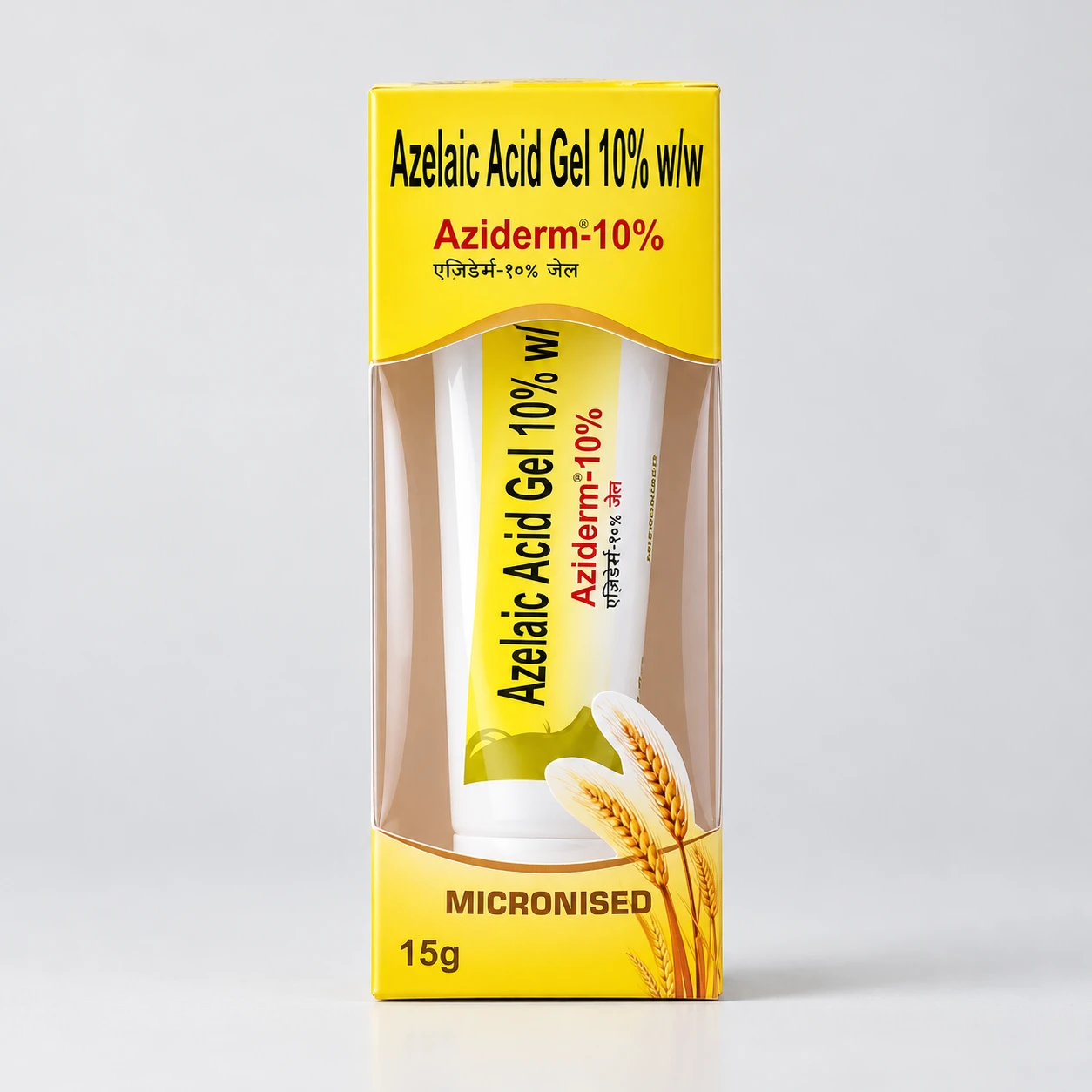
Aziderm 10% Gel Price in Bangladesh – Azelaic Acid 10% Gel (15g)
Looking for the genuine Aziderm 10% Gel price in Bangladesh? Aziderm 10% Gel from Micro Labs Ltd. contains azelaic acid 10% w/w, a dermatologist-trusted ingredient that treats acne, calms redness and helps fade dark spots, post-acne marks and melasma. Azelaic acid is one of the few ingredients that works on acne bacteria, clogged pores, inflammation and excess pigment at the same time, while being gentle enough for many sensitive skin types. You can check the current Aziderm 10% Gel price at the top of this page and order the original 15g tube from Derma.com.bd with fast delivery inside Dhaka and nationwide home delivery.
Aziderm 10% Gel combines the gentlest azelaic acid strength in the range with a light, water-based gel that absorbs quickly and leaves no greasy layer. It is a good choice for oily, combination and acne-prone skin, for first-time users, for mild acne and early pigmentation, and for long-term maintenance once stronger treatment has worked. Its mild strength makes it easier to use alongside other treatments in hot, humid weather.
Aziderm is a medicated product and is best used on the advice of a dermatologist. This guide explains how azelaic acid works, who Aziderm 10% Gel is suitable for, how to apply it, how long it takes to work, how it compares with the other Aziderm strengths and what precautions you should follow.
About Micro Labs
Micro Labs Ltd., headquartered in Bengaluru, India, is a major pharmaceutical company with a well-respected dermatology range. Its Aziderm azelaic acid line is among the most prescribed azelaic acid brands in South Asia. Explore the range on our Micro Labs brand page, including Aziderm 15% Gel, Aziderm 20% Cream, Aziderm 20% Gel, and the Micro Glyco glycolic acid creams.
What Is Azelaic Acid?
Azelaic acid is a naturally occurring dicarboxylic acid found in grains such as wheat, rye and barley, and it is also produced by a yeast that lives on normal skin. In dermatology it is made in the laboratory and used in creams and gels at 10%, 15% and 20%. It is approved in many countries for acne and rosacea and is widely used for melasma and post-inflammatory hyperpigmentation. DermNet describes it as a well-tolerated topical treatment with antibacterial, anti-inflammatory and anti-pigment effects.
How Azelaic Acid Works
- Antibacterial: Reduces Cutibacterium acnes, the bacteria involved in acne, without causing antibiotic resistance.
- Keratolytic (pore-clearing): Normalises the shedding of skin cells inside pores, which helps prevent blackheads and whiteheads.
- Anti-inflammatory: Calms red, swollen pimples and the redness of rosacea.
- Anti-pigment: Inhibits tyrosinase and selectively targets overactive pigment cells, helping fade melasma, dark spots and post-acne marks while leaving normal skin colour unaffected.
- Antioxidant: Helps reduce free-radical damage that can worsen inflammation and pigmentation.
Uses of Aziderm 10% Gel
- Mild to moderate acne – blackheads, whiteheads, red pimples.
- Post-inflammatory hyperpigmentation (dark marks after acne).
- Melasma (as part of a dermatologist-guided plan).
- Rosacea-related redness and bumps.
- Uneven skin tone and dark spots.
Benefits
- Treats acne and pigmentation at the same time.
- Safe for long-term use on the advice of a doctor.
- Does not cause antibiotic resistance.
- Generally gentler than hydroquinone and retinoids.
- Often considered by doctors during pregnancy when other treatments are unsuitable (only under medical advice).
- Suitable for brown skin, with a low risk of over-lightening normal skin.
Comparing the Aziderm Range: 10%, 15% and 20%
Micro Labs offers azelaic acid in several strengths and textures so your dermatologist can match the product to your skin:
- Aziderm 10% Cream: Mildest strength, ideal for sensitive skin, beginners, mild acne and maintenance.
- Aziderm 10% Gel (this product): Same gentle strength in a light, water-based gel for oily and acne-prone skin.
- Aziderm 15% Gel: Light gel, commonly used for rosacea and for oily, acne-prone skin.
- Aziderm 20% Cream: Highest strength in a cream base, classic choice for acne and melasma in normal-to-dry skin.
- Aziderm 20% Gel: Highest strength in a light gel base for oily skin.
Higher strength does not always mean better results. A strength that you can use comfortably every day usually works better than a stronger one that irritates your skin and makes you stop. Aziderm 10% Gel is the gentle option in this range. The gel texture absorbs quickly and feels light, which many people with oily skin prefer in hot and humid weather.
Aziderm for Melasma and Dark Spots
Melasma is very common among women in Bangladesh. It appears as brown or grey-brown patches on the cheeks, forehead, nose and upper lip and is triggered by sun exposure, hormones, pregnancy and heat. Azelaic acid helps by calming overactive pigment cells. Unlike hydroquinone, it can generally be used for longer periods under medical supervision, and it is less likely to cause rebound darkening or ochronosis. Many dermatologists use azelaic acid as part of a combination plan, alternating with other treatments such as Triluma for short courses, or for maintenance after a stronger treatment has improved the patches. Strict sun protection is the most important part of any melasma plan; without it, no cream will give lasting results.
For post-acne marks (post-inflammatory hyperpigmentation), azelaic acid has a double advantage: it treats the active pimples that cause new marks and fades the old marks at the same time. Most people see gradual improvement over two to three months.
Aziderm for Acne
Azelaic acid works well for mild to moderate acne with blackheads, whiteheads and red pimples. Because it does not cause bacterial resistance, it can be used long-term, unlike topical antibiotics. It is often combined with other acne treatments under medical advice – for example, a retinoid such as Differin at night and azelaic acid in the morning, or benzoyl peroxide such as Benzac AC 5% Gel on alternate days. The American Academy of Dermatology lists azelaic acid among recommended topical acne treatments.
Aziderm for Rosacea
Rosacea causes facial redness, flushing, visible blood vessels and sometimes acne-like bumps. Azelaic acid reduces inflammation and the bumps and pustules of rosacea. People with rosacea have sensitive skin, so they should start slowly, use a gentle cleanser and fragrance-free moisturiser, avoid triggers such as very spicy food, hot drinks and heat, and use sunscreen daily. A dermatologist should confirm the diagnosis, as rosacea is sometimes confused with acne or steroid-induced skin damage.
Building a Routine With Aziderm 10% Gel
Morning: gentle cleanser → Aziderm 10% Gel (once tolerated twice daily) → light moisturiser → sunscreen SPF 30+.
Night: gentle cleanser → Aziderm 10% Gel or your other prescribed treatment → moisturiser such as Hyalugel Plus.
Keep the rest of your routine simple. Avoid scrubs, strong toners and many active ingredients at once, especially in the first month.
What Results Can You Expect?
In the first two weeks, mild tingling is common and the skin may feel slightly dry. By four to eight weeks, many people notice fewer new pimples and less redness. Pigmentation and melasma improve more slowly, usually becoming visible after eight to twelve weeks and continuing to improve with ongoing use. If you stop using sunscreen or stop treatment too early, pigmentation can return. Your dermatologist may advise continuing a lower strength for maintenance.
Tips to Reduce Irritation
- Start once daily at night before moving to twice daily.
- Apply to completely dry skin.
- Use only a thin layer – a pea-sized amount covers the face.
- Apply a fragrance-free moisturiser afterwards if your skin feels dry.
- Avoid using it on the same night as strong acids or retinoids unless your doctor advises it.
Who Should Avoid Aziderm 10% Gel?
Do not use Aziderm if you are allergic to azelaic acid or any other ingredient in the product. People with very sensitive skin, active eczema around the face, or a history of asthma flare-ups with topical products should speak to a doctor first. It is not intended for children unless prescribed. Pregnant and breastfeeding women must consult their doctor before use, even though azelaic acid is often considered one of the safer options.
How to Use Aziderm 10% Gel
- Wash the affected area with a mild cleanser and pat dry.
- Apply a thin layer to the whole affected area (not just individual spots) and rub in gently.
- Use once daily at night for the first one to two weeks, then twice daily (morning and night) if tolerated, or as directed by your dermatologist.
- Wash your hands after application and avoid the eyes, mouth and inside the nose.
- Apply a broad-spectrum sunscreen SPF 30+ every morning.
Common Mistakes When Using Azelaic Acid
- Spot-treating only: Azelaic acid works best when applied to the whole affected area, because it also prevents new pimples and marks.
- Giving up too early: Many people stop after two or three weeks because of tingling or slow results. Real improvement usually needs two to three months.
- Skipping sunscreen: Sun exposure keeps making new pigment, which cancels out the effect of the treatment.
- Mixing with steroid creams: Never combine Aziderm with steroid-based "fairness" creams bought without prescription; these can cause serious skin damage.
- Applying too thickly: More product does not mean faster results but does increase irritation.
Storage Tips for Bangladesh's Climate
High heat and humidity can affect medicated gels. Store Aziderm 10% Gel below 30°C, away from direct sunlight and moisture, and keep the cap tightly closed. Do not leave the tube in a parked car or a bag in the sun. Check the expiry date before use and do not use the product if its colour, smell or texture changes.
Possible Side Effects
The most common side effects are mild burning, stinging, tingling, itching, dryness or redness when you start, which usually improve within two to four weeks. Rarely, allergic reactions or lightening of the skin can occur. Stop using it and see a doctor if irritation is severe or does not settle.
Precautions
- For external use only. Avoid contact with eyes, lips and mucous membranes; if contact occurs, rinse well with water.
- Use under the guidance of a dermatologist, especially for melasma and rosacea.
- Do not use on broken, sunburnt or eczema-affected skin.
- Use daily sunscreen during treatment.
- Consult your doctor before using during pregnancy or breastfeeding.
- Keep out of reach of children; store below 30°C.
Why Buy From Derma.com.bd?
Derma.com.bd is a trusted online store for original dermatological products in Bangladesh, with proper storage and fast delivery. See more pigmentation treatments in our Dark Spots & Hyperpigmentation collection and acne care in Acne & Pimples.
Frequently Asked Questions
What is the Aziderm 10% Gel price in Bangladesh?
The current price is shown at the top of this page and may change with offers and stock.
How long does Aziderm take to work?
Acne usually improves in 4–8 weeks; pigmentation and melasma often take 8–12 weeks or more of regular use with sunscreen.
Can I use Aziderm with sunscreen and makeup?
Yes. Let it absorb fully, then apply moisturiser, sunscreen and makeup.
Does Aziderm lighten normal skin?
Azelaic acid mainly targets overactive pigment cells, so it is unlikely to lighten normal skin colour significantly.
Is a burning feeling normal?
Mild tingling or burning in the first weeks is common and usually settles. Severe or persistent burning means you should stop and consult your doctor.
Can I use Aziderm during pregnancy?
Azelaic acid is often considered relatively safe, but only use it during pregnancy or breastfeeding if your doctor advises it.
Product Details
- Product: Aziderm 10% Gel
- Brand: Micro Labs Ltd.
- Active ingredient: Azelaic Acid 10% w/w
- Form: Gel
- Net quantity: 15g
- Uses: Acne, post-acne marks, melasma, rosacea, uneven tone
- Country of origin: India
Final Words
Aziderm 10% Gel is a versatile, well-tolerated azelaic acid treatment for acne, redness and pigmentation. Use it consistently with sunscreen and under a dermatologist's guidance for the best results. Order the original Aziderm 10% Gel from Derma.com.bd today at the best price in Bangladesh.
Disclaimer: This information is for educational purposes only and is not a substitute for medical advice. Aziderm is a medicated product; consult a dermatologist before use.
Aziderm 10% Gel Price in Bangladesh – অ্যাজেলাইক অ্যাসিড ১০% জেল (১৫ গ্রাম)
Aziderm 10% Gel হলো Micro Labs Ltd.-এর অ্যাজেলাইক অ্যাসিড ১০% w/w যুক্ত একটি ঔষধি জেল, যা ব্রণ, লালচে ভাব, কালো দাগ, ব্রণের দাগ এবং মেছতা কমাতে সাহায্য করে। অ্যাজেলাইক অ্যাসিড এমন কয়েকটি উপাদানের একটি যা একসাথে ব্রণের ব্যাকটেরিয়া, বন্ধ লোমকূপ, প্রদাহ এবং অতিরিক্ত পিগমেন্টের উপর কাজ করে, অথচ অনেক সংবেদনশীল ত্বকেও সহনীয়। Aziderm 10% Gel price in Bangladesh জানতে এই পেজের উপরে বর্তমান দাম দেখুন এবং Derma.com.bd থেকে আসল ১৫ গ্রাম টিউব অর্ডার করুন।
Aziderm ১০% জেল এই রেঞ্জের সবচেয়ে মৃদু শক্তির অ্যাজেলাইক অ্যাসিড, হালকা পানি-ভিত্তিক জেল বেসে, যা দ্রুত শোষিত হয় এবং তেলতেলে ভাব রাখে না। তৈলাক্ত, মিশ্র ও ব্রণপ্রবণ ত্বক, প্রথমবার ব্যবহারকারী, হালকা ব্রণ ও প্রাথমিক দাগের জন্য এবং শক্তিশালী চিকিৎসার পর রক্ষণাবেক্ষণের জন্য এটি ভালো পছন্দ।
গুরুত্বপূর্ণ: Aziderm একটি ঔষধি পণ্য, তাই চর্মরোগ বিশেষজ্ঞের পরামর্শ অনুযায়ী ব্যবহার করাই সবচেয়ে ভালো।
Micro Labs সম্পর্কে
Micro Labs Ltd. ভারতের বেঙ্গালুরু-ভিত্তিক একটি বড় ফার্মাসিউটিক্যাল কোম্পানি। তাদের Aziderm রেঞ্জ দক্ষিণ এশিয়ায় সবচেয়ে বেশি প্রেসক্রাইব করা অ্যাজেলাইক অ্যাসিড ব্র্যান্ডগুলোর একটি। সব পণ্য দেখুন Micro Labs ব্র্যান্ড পেজ-এ।
অ্যাজেলাইক অ্যাসিড কী?
অ্যাজেলাইক অ্যাসিড গম, যব ও বার্লির মতো শস্যে প্রাকৃতিকভাবে পাওয়া যায় এবং আমাদের ত্বকের স্বাভাবিক এক ধরনের ইস্টও এটি তৈরি করে। ডার্মাটোলজিতে এটি ১০%, ১৫% ও ২০% শক্তিতে ক্রিম ও জেল হিসেবে ব্যবহৃত হয়। বিভিন্ন দেশে ব্রণ ও রোসেশিয়ার চিকিৎসায় অনুমোদিত এবং মেছতা ও ব্রণের দাগে ব্যাপকভাবে ব্যবহৃত। বিস্তারিত জানতে পড়ুন DermNet-এর অ্যাজেলাইক অ্যাসিড গাইড।
কীভাবে কাজ করে?
- ব্যাকটেরিয়া-রোধী: ব্রণের ব্যাকটেরিয়া কমায়, অ্যান্টিবায়োটিক রেজিস্ট্যান্স তৈরি করে না।
- লোমকূপ পরিষ্কার: লোমকূপের ভেতরে কোষ ঝরে পড়া স্বাভাবিক রাখে, ফলে ব্ল্যাকহেডস ও হোয়াইটহেডস কম হয়।
- প্রদাহ-রোধী: লাল, ফোলা ব্রণ ও রোসেশিয়ার লালচে ভাব কমায়।
- পিগমেন্ট-রোধী: টাইরোসিনেজ কমিয়ে এবং অতিসক্রিয় রঞ্জক কোষকে লক্ষ্য করে মেছতা ও কালো দাগ হালকা করে, স্বাভাবিক ত্বকের রং তেমন বদলায় না।
- অ্যান্টিঅক্সিডেন্ট: ফ্রি র্যাডিক্যালের ক্ষতি কমায়।
ব্যবহার ও উপকারিতা
- হালকা থেকে মাঝারি ব্রণ – ব্ল্যাকহেডস, হোয়াইটহেডস, লাল ব্রণ।
- ব্রণের পর থেকে যাওয়া কালো দাগ।
- মেছতা (ডাক্তারের তত্ত্বাবধানে)।
- রোসেশিয়ার লালচে ভাব ও দানা।
- অসমান ত্বকের রং।
- দীর্ঘমেয়াদে ব্যবহারযোগ্য এবং সাধারণত হাইড্রোকুইনোন ও রেটিনয়েডের চেয়ে মৃদু।
Aziderm রেঞ্জের তুলনা
- Aziderm 10% Cream – সবচেয়ে মৃদু, সংবেদনশীল ত্বক ও রক্ষণাবেক্ষণের জন্য।
- Aziderm 15% Gel – হালকা জেল, রোসেশিয়া ও তৈলাক্ত ত্বকের জন্য।
- Aziderm 20% Cream – সর্বোচ্চ শক্তির ক্রিম, ব্রণ ও মেছতার জন্য।
- Aziderm 20% Gel – সর্বোচ্চ শক্তির হালকা জেল, তৈলাক্ত ত্বকের জন্য।
বেশি শক্তি মানেই সবসময় ভালো ফল নয়। যে শক্তি প্রতিদিন আরামে ব্যবহার করতে পারবেন, সেটিই সাধারণত বেশি কার্যকর।
মেছতা ও কালো দাগে Aziderm
বাংলাদেশের নারীদের মধ্যে মেছতা খুবই সাধারণ – গাল, কপাল, নাক ও ঠোঁটের উপরে বাদামি দাগ, যা রোদ, হরমোন, গর্ভাবস্থা ও তাপে বাড়ে। অ্যাজেলাইক অ্যাসিড অতিসক্রিয় রঞ্জক কোষকে শান্ত করে। হাইড্রোকুইনোনের তুলনায় এটি সাধারণত ডাক্তারের তত্ত্বাবধানে দীর্ঘ সময় ব্যবহার করা যায়। অনেক ডার্মাটোলজিস্ট এটি Triluma-এর মতো স্বল্পমেয়াদি চিকিৎসার পর রক্ষণাবেক্ষণে ব্যবহার করেন। মনে রাখবেন, প্রতিদিন সানস্ক্রিন ছাড়া কোনো ক্রিমেই মেছতা স্থায়ীভাবে কমে না।
ব্রণে Aziderm
অ্যাজেলাইক অ্যাসিড ব্যাকটেরিয়া রেজিস্ট্যান্স তৈরি করে না, তাই দীর্ঘমেয়াদে ব্যবহার করা যায়। ডাক্তারের পরামর্শে এটি রাতে Differin-এর মতো রেটিনয়েড এবং সকালে Aziderm, অথবা Benzac AC 5%-এর সাথে একদিন পরপর ব্যবহার করা হয়।
রোসেশিয়ায় Aziderm
রোসেশিয়ায় মুখে লালচে ভাব, হঠাৎ লাল হয়ে যাওয়া, সূক্ষ্ম রক্তনালী দেখা এবং কখনো ব্রণের মতো দানা হয়। অ্যাজেলাইক অ্যাসিড প্রদাহ কমিয়ে এই দানা ও লালচে ভাব কমাতে সাহায্য করে। রোসেশিয়ার ত্বক খুব সংবেদনশীল, তাই ধীরে শুরু করুন, মৃদু ক্লিনজার ও সুগন্ধিমুক্ত ময়েশ্চারাইজার ব্যবহার করুন এবং অতিরিক্ত ঝাল খাবার, গরম পানীয় ও তাপ এড়িয়ে চলুন। অনেক সময় রোসেশিয়াকে ব্রণ বা স্টেরয়েড ক্রিমের ক্ষতির সাথে গুলিয়ে ফেলা হয়, তাই ডার্মাটোলজিস্টের মাধ্যমে রোগ নির্ণয় জরুরি।
সাধারণ ভুলগুলো এড়িয়ে চলুন
- শুধু একটি দাগে লাগানো – পুরো আক্রান্ত জায়গায় লাগালে নতুন ব্রণ ও দাগও প্রতিরোধ হয়।
- দুই-তিন সপ্তাহ পরেই বন্ধ করে দেওয়া – প্রকৃত উন্নতিতে দুই-তিন মাস লাগে।
- সানস্ক্রিন বাদ দেওয়া – রোদ নতুন পিগমেন্ট তৈরি করে চিকিৎসার ফল নষ্ট করে।
- খুব মোটা করে লাগানো – এতে দ্রুত ফল আসে না, বরং জ্বালা বাড়ে।
বাংলাদেশের আবহাওয়ায় সংরক্ষণ
অতিরিক্ত গরম ও আর্দ্রতা ঔষধি জেল-এর মান নষ্ট করতে পারে। পার্ক করা গাড়ি বা রোদে রাখা ব্যাগে টিউব রাখবেন না, ব্যবহারের পর ঢাকনা ভালোভাবে বন্ধ করুন এবং মেয়াদ দেখে ব্যবহার করুন।
ব্যবহারের নিয়ম
- হালকা ক্লিনজার দিয়ে আক্রান্ত জায়গা ধুয়ে শুকিয়ে নিন।
- শুধু দাগের উপর নয়, পুরো আক্রান্ত জায়গায় পাতলা করে লাগিয়ে আলতো ঘষুন।
- প্রথম এক-দুই সপ্তাহ দিনে একবার রাতে, সহ্য হলে দিনে দুইবার, অথবা ডাক্তারের নির্দেশ অনুযায়ী।
- লাগানোর পর হাত ধুয়ে ফেলুন; চোখ, মুখ ও নাকের ভেতর এড়িয়ে চলুন।
- প্রতিদিন সকালে SPF 30+ সানস্ক্রিন ব্যবহার করুন। শুষ্ক লাগলে Hyalugel Plus-এর মতো হালকা ময়েশ্চারাইজার দিন।
কী ধরনের ফলাফল আশা করবেন?
প্রথম দুই সপ্তাহে হালকা শিরশিরে ভাব ও সামান্য শুষ্কতা স্বাভাবিক। চার থেকে আট সপ্তাহে নতুন ব্রণ ও লালচে ভাব কমতে দেখা যায়। মেছতা ও দাগ কমতে সাধারণত আট থেকে বারো সপ্তাহ বা তার বেশি সময় লাগে। সানস্ক্রিন বা চিকিৎসা আগেভাগে বন্ধ করলে দাগ ফিরে আসতে পারে।
পার্শ্বপ্রতিক্রিয়া ও সতর্কতা
- শুরুতে হালকা জ্বালা, শিরশিরে ভাব, চুলকানি বা শুষ্কতা হতে পারে, যা সাধারণত দুই-চার সপ্তাহে কমে যায়।
- তীব্র বা দীর্ঘস্থায়ী জ্বালা হলে ব্যবহার বন্ধ করে ডাক্তার দেখান।
- কাটা, রোদে পোড়া বা একজিমাযুক্ত ত্বকে লাগাবেন না।
- ডাক্তারের প্রেসক্রিপশন ছাড়া কেনা স্টেরয়েডযুক্ত "ফর্সাকারী" ক্রিমের সাথে কখনো মেশাবেন না।
- গর্ভাবস্থা ও স্তন্যদানকালে ডাক্তারের পরামর্শ নিন।
- ৩০°সে-এর নিচে, রোদ থেকে দূরে এবং শিশুদের নাগালের বাইরে রাখুন।
কেন Derma.com.bd থেকে কিনবেন?
Derma.com.bd বাংলাদেশে আসল ডার্মাটোলজিক্যাল পণ্যের বিশ্বস্ত অনলাইন শপ। আরও দেখুন Dark Spots & Hyperpigmentation ও Acne & Pimples কালেকশন।
সচরাচর জিজ্ঞাসা (FAQ)
বাংলাদেশে Aziderm 10% Gel-এর দাম কত?
বর্তমান দাম এই পেজের উপরে দেওয়া আছে।
কতদিনে কাজ করে?
ব্রণে সাধারণত ৪–৮ সপ্তাহ, আর দাগ ও মেছতায় ৮–১২ সপ্তাহ বা তার বেশি।
এটি কি স্বাভাবিক ত্বক ফর্সা করে?
না, এটি মূলত অতিসক্রিয় রঞ্জক কোষে কাজ করে, তাই স্বাভাবিক ত্বকের রং তেমন বদলায় না।
পণ্যের বিবরণ
- পণ্য: Aziderm 10% Gel
- ব্র্যান্ড: Micro Labs Ltd.
- সক্রিয় উপাদান: অ্যাজেলাইক অ্যাসিড ১০% w/w
- ধরন: জেল
- পরিমাণ: ১৫ গ্রাম
- উৎপত্তি: ভারত
দ্রষ্টব্য: এই তথ্য শুধুমাত্র শিক্ষামূলক উদ্দেশ্যে। Aziderm একটি ঔষধি পণ্য; ব্যবহারের আগে চর্মরোগ বিশেষজ্ঞের পরামর্শ নিন।
Write a Review
Customer Reviews (0)
No reviews yet. Be the first to review this product!