
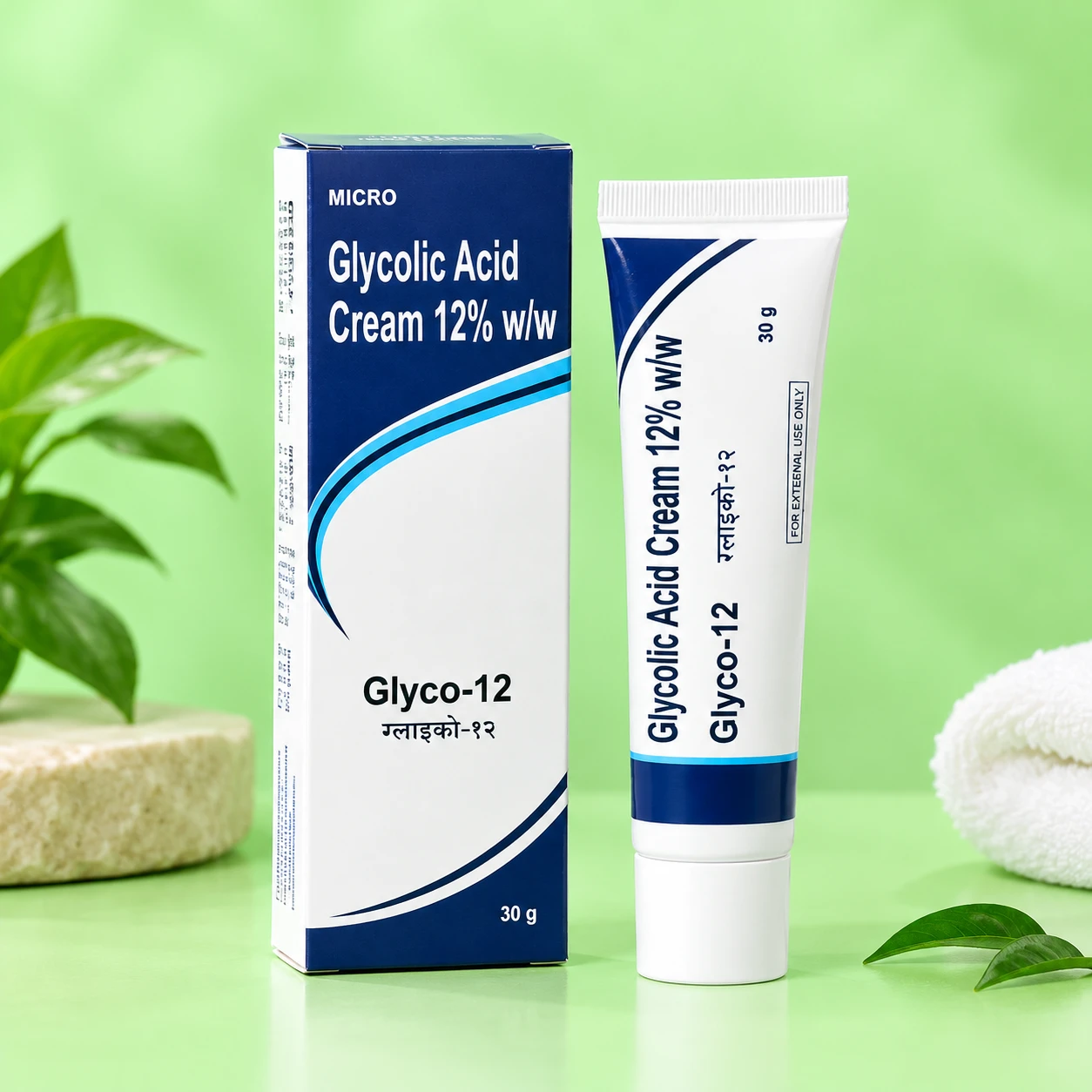
Micro Glyco 12% Cream Price in Bangladesh – Glycolic Acid 12% Cream (30g)
Looking for the authentic Micro Glyco 12% cream price in Bangladesh? Micro Glyco 12% is a glycolic acid cream from Micro Labs Ltd. that gently exfoliates the skin, helps unclog pores, smooths rough texture and improves the look of dark spots, post-acne marks and uneven tone. Glycolic acid is the best-known alpha hydroxy acid (AHA) in dermatology and has been used for decades in creams and in-clinic peels. You can check the current Micro Glyco 12% price at the top of this page and order the original 30g tube from Derma.com.bd with fast delivery in Dhaka and home delivery across Bangladesh.
Micro Glyco 12% is the stronger strength of the Micro Labs glycolic acid range. It is generally used by people whose skin is already used to AHAs, for more stubborn dullness, rough texture, clogged pores, post-acne marks and pigmentation. Because the concentration is double that of Micro Glyco 6%, it works faster but also carries a higher chance of stinging, redness and peeling. Most dermatologists recommend starting with 6% and moving to 12% only after a few weeks of good tolerance.
This guide covers how glycolic acid works, what Micro Glyco 12% can and cannot do, who should use it, how to apply it safely, how to combine it with other treatments and the precautions every user should know.
About Micro Labs
Micro Labs Ltd. is one of India's large pharmaceutical companies, headquartered in Bengaluru, with a strong dermatology portfolio used by skin specialists across South Asia. Its well-known skin products include the Aziderm azelaic acid range and the Micro Glyco glycolic acid creams. See all products on our Micro Labs brand page, including Aziderm 10% Cream and Aziderm 20% Cream.
What Is Glycolic Acid?
Glycolic acid is a small, water-soluble alpha hydroxy acid originally derived from sugar cane. Because its molecule is the smallest of all AHAs, it penetrates the upper layer of the skin easily. There it loosens the "glue" that holds dead skin cells together, so they shed more evenly. The result is smoother, brighter-looking skin, cleaner pores and better absorption of the moisturisers and treatments you use afterwards. At higher strengths and with regular use, glycolic acid can also support collagen renewal and help fade surface pigmentation. DermNet explains more about how alpha hydroxy acids are used in dermatology.
Key Ingredient
- Glycolic Acid 12% w/w: An alpha hydroxy acid that exfoliates dead surface cells, helps clear clogged pores and improves the look of dullness and pigmentation.
- Cream base: Provides an even, easy-to-spread texture suitable for night-time application.
Benefits of Micro Glyco 12% Cream
- Exfoliates dull, dead skin cells for a brighter complexion.
- Helps unclog pores and reduce blackheads and whiteheads (comedonal acne).
- Improves the look of post-acne marks and dark spots.
- Helps even out skin tone and reduce mild pigmentation.
- Smooths rough, uneven skin texture.
- Improves dryness and rough, scaly patches by removing built-up dead skin.
- Helps other treatments and moisturisers absorb better.
- Higher strength for faster, more visible results in AHA-experienced skin.
Who Should Use Micro Glyco 12%?
Micro Glyco 12% is suited to adults with oily or resilient skin who have used a lower-strength AHA before, and who need stronger exfoliation for rough texture, stubborn blackheads, post-acne marks or pigmentation. It should be used on the advice of a dermatologist, especially if you have melasma, active inflamed acne, rosacea or eczema. Browse our Dark Spots & Hyperpigmentation and Acne & Pimples collections for related treatments.
How Glycolic Acid Improves Pigmentation and Acne Marks
Dark spots and post-acne marks form when melanin builds up in the upper layers of the skin after sun exposure, inflammation or hormonal changes. Every day new skin cells move upward and old cells shed, but in dull or pigmented skin this process slows down, so pigmented cells stay on the surface for longer. Glycolic acid speeds up the shedding of these cells, which gradually lightens surface pigmentation. Research also suggests that glycolic acid can reduce tyrosinase activity, the enzyme involved in melanin production. This is why glycolic acid is often combined with other brightening ingredients and with strict sun protection in dermatologist-guided pigmentation routines.
For acne, glycolic acid helps loosen the dead cells and oil that block pores. When pores stay clear, fewer blackheads and whiteheads develop, and those that exist become easier to clear. It is most useful for comedonal acne. Red, painful or cystic acne needs medical treatment, such as Epiduo gel or other options prescribed by a dermatologist.
Micro Glyco 6% vs 12%: Choosing the Right Strength
The two strengths contain the same active ingredient but at different concentrations. Micro Glyco 6% offers gentle daily exfoliation and is ideal for beginners, mildly sensitive skin and maintenance. Micro Glyco 12%, the product on this page, gives stronger exfoliation and faster visible changes but is more likely to cause tingling and peeling. A common dermatologist approach is to start with 6% for four to eight weeks and then, if needed, move to 12%. You can compare with Micro Glyco 6%. Never jump to a higher strength simply because results feel slow – irritation can trigger more pigmentation in brown skin.
Why Sunscreen Is Non-Negotiable
Exfoliating acids remove part of the skin's natural protective surface, which makes it more sensitive to UV rays. In Bangladesh, where sunlight is strong for most of the year, using glycolic acid without sunscreen can make pigmentation worse rather than better. Apply a broad-spectrum SPF 30 or higher sunscreen every morning, even on cloudy days and indoors near windows, and reapply every two to three hours when outdoors. Wearing a cap or using an umbrella also helps. The American Academy of Dermatology has clear guidance on choosing and applying sunscreen correctly.
What Results Can You Expect?
In the first two weeks, most users notice smoother, softer skin and a fresher glow. Blackheads and rough patches usually begin to improve after four to six weeks. Fading of post-acne marks and mild pigmentation generally takes eight to twelve weeks of consistent night-time use combined with daily sunscreen. Deep or long-standing pigmentation such as melasma often needs a combination treatment plan from a dermatologist. Results vary depending on skin type, the cause of the problem and how consistently the routine is followed.
Combining Micro Glyco With Other Products
- Moisturisers: A light hydrating gel such as Hyalugel Plus helps reduce dryness and tightness.
- Azelaic acid: Products such as Aziderm can be used on alternate nights for pigmentation and acne, if your dermatologist recommends it.
- Retinoids: Tretinoin and adapalene should usually be used on different nights from glycolic acid to avoid irritation.
- Vitamin C and niacinamide: Can often be used in the morning under sunscreen while glycolic acid is used at night.
- Scrubs and peels: Avoid physical scrubs and home peels while using Micro Glyco.
Common Mistakes to Avoid
- Applying on damp skin straight after washing, which increases stinging.
- Using too much product or applying several times a day.
- Skipping sunscreen during the day.
- Using it together with many other actives on the same night.
- Applying on irritated, sunburnt or freshly waxed skin.
- Stopping after one or two weeks – glycolic acid needs time.
Is Glycolic Acid Safe for Brown Skin?
Glycolic acid is widely used for South Asian skin. However, brown skin is more prone to post-inflammatory hyperpigmentation, which means irritation itself can leave dark marks. The key is to start slowly, build up gradually, keep the skin moisturised, protect it from the sun and stop if redness or burning develops. Used this way, Micro Glyco 12% can be a helpful part of a routine for clearer and more even-toned skin.
How to Use Micro Glyco 12% Cream
- Use at night only. Wash your face with a gentle cleanser and pat completely dry.
- Wait 10–15 minutes so the skin is fully dry; damp skin increases stinging.
- Apply a thin, pea-sized layer to the face, avoiding the eyes, nostrils, lip corners and any broken skin.
- Start with two to three nights a week, then increase gradually only if your skin tolerates it well.
- Follow with a light, fragrance-free moisturiser if your skin feels dry.
- Every morning, apply a broad-spectrum sunscreen of SPF 30 or higher and reapply when outdoors.
A mild tingling for a minute or two after application is common. Strong burning, redness that lasts, swelling or blisters mean you should wash it off and stop using it until you speak to your doctor.
When to See a Dermatologist
See a dermatologist before starting Micro Glyco 12% if you have melasma, very sensitive skin, rosacea, eczema, frequent allergies or painful inflamed acne. Also seek advice if your skin becomes very red, swollen, blistered or darker during use, or if you see no improvement after three months. A doctor can confirm the cause of your pigmentation or acne, choose the right strength and combine glycolic acid with other proven treatments safely. Self-treating with several strong products at once is one of the most common reasons for skin damage and worsening pigmentation in Bangladesh.
Using Micro Glyco on the Body
Glycolic acid is also useful beyond the face. It can soften rough elbows, knees and heels, improve the bumpy texture of keratosis pilaris on the upper arms, and help with body acne on the back and chest. Apply a thin layer at night to clean, dry skin, and protect exposed areas with sunscreen during the day.
Precautions
- For external use only. Avoid the eyes, lips, inside the nose and broken or sunburnt skin.
- Glycolic acid increases sun sensitivity. Daily sunscreen is essential during use and for at least a week after stopping.
- Do not use on the same night as tretinoin, adapalene, benzoyl peroxide, other acids or scrubs unless your dermatologist advises it.
- Stop waxing, threading or laser on treated areas for a few days before and after, as skin may be more sensitive.
- Not recommended during pregnancy or breastfeeding without a doctor's advice, and not for children.
- Do not use if you have contact dermatitis or a known allergy to any ingredient.
- Store at room temperature, away from sunlight and out of reach of children.
Why Buy From Derma.com.bd?
Derma.com.bd is a specialised online shop for original dermatological products in Bangladesh. We store products correctly and deliver quickly across the country. See more brightening options in our Uneven Skin Tone & Tanning collection.
Frequently Asked Questions
What is the Micro Glyco 12% cream price in Bangladesh?
The current price is shown at the top of this page and may change with offers and stock.
Should I choose Micro Glyco 6% or 12%?
Beginners and sensitive skin usually start with 6%. People already used to AHAs and with oily, resilient skin may use 12% on a dermatologist's advice.
Can I use Micro Glyco 12% every night?
Many people can after building up slowly, but some skin types do better with alternate nights. Follow your dermatologist's advice.
Can I use it on my body?
Yes, it is often used on rough elbows, knees and body acne, with sunscreen on exposed areas.
Does it tingle?
A mild tingle for a minute or two is normal. Strong burning is not – wash it off and consult your doctor.
Can I use Micro Glyco during pregnancy?
Do not use it during pregnancy or breastfeeding unless your doctor approves.
Product Details
- Product: Micro Glyco 12% Cream
- Brand: Micro Labs Ltd.
- Active ingredient: Glycolic Acid 12% w/w
- Net quantity: 30g
- Use: Dullness, comedonal acne, post-acne marks, pigmentation, rough texture
- Country of origin: India
Final Words
Micro Glyco 12% is a trusted, affordable glycolic acid cream that can make a visible difference to dull, uneven and congested skin when used correctly with sunscreen. Order the original Micro Glyco 12% cream from Derma.com.bd today at the best price in Bangladesh.
Disclaimer: This information is for educational purposes only and is not a substitute for medical advice. Use glycolic acid products under the guidance of a dermatologist.
Micro Glyco 12% Cream Price in Bangladesh – গ্লাইকোলিক অ্যাসিড ১২% ক্রিম (৩০ গ্রাম)
Micro Glyco 12% হলো Micro Labs Ltd.-এর একটি গ্লাইকোলিক অ্যাসিড ক্রিম, যা ত্বকের মৃত কোষ মৃদুভাবে তুলে ফেলে, লোমকূপ পরিষ্কার রাখে, খসখসে ভাব কমায় এবং কালো দাগ, ব্রণের দাগ ও অসমান ত্বকের রং উন্নত করতে সাহায্য করে। গ্লাইকোলিক অ্যাসিড ডার্মাটোলজিতে সবচেয়ে পরিচিত আলফা হাইড্রক্সি অ্যাসিড (AHA)। Micro Glyco 12% cream price in Bangladesh জানতে এই পেজের উপরে বর্তমান দাম দেখুন এবং Derma.com.bd থেকে আসল ৩০ গ্রাম টিউব অর্ডার করুন।
Micro Glyco ১২% হলো এই রেঞ্জের বেশি শক্তির ক্রিম। যাদের ত্বক আগে থেকেই AHA-তে অভ্যস্ত এবং যাদের একগুঁয়ে খসখসে ভাব, ব্ল্যাকহেডস, ব্রণের দাগ বা পিগমেন্টেশন আছে, তাদের জন্য এটি ব্যবহৃত হয়। এটি Micro Glyco 6%-এর দ্বিগুণ শক্তির, তাই দ্রুত কাজ করে কিন্তু জ্বালা ও চামড়া ওঠার সম্ভাবনাও বেশি।
Micro Labs সম্পর্কে
Micro Labs Ltd. ভারতের বেঙ্গালুরু-ভিত্তিক একটি বড় ফার্মাসিউটিক্যাল কোম্পানি, যাদের ডার্মাটোলজি পণ্য দক্ষিণ এশিয়ার চর্মরোগ বিশেষজ্ঞরা ব্যাপকভাবে ব্যবহার করেন। তাদের সব পণ্য দেখুন Micro Labs ব্র্যান্ড পেজ-এ, যেমন Aziderm 10% Cream।
গ্লাইকোলিক অ্যাসিড কী এবং কীভাবে কাজ করে?
গ্লাইকোলিক অ্যাসিড আখ থেকে পাওয়া একটি ছোট অণুর AHA, তাই এটি ত্বকের উপরের স্তরে সহজে প্রবেশ করে। এটি মৃত কোষগুলোকে একসাথে ধরে রাখা "আঠা" আলগা করে, ফলে মৃত কোষ সমানভাবে ঝরে পড়ে। এতে ত্বক মসৃণ ও উজ্জ্বল দেখায়, লোমকূপ পরিষ্কার থাকে এবং অন্যান্য ক্রিম ভালোভাবে শোষিত হয়। পিগমেন্টযুক্ত কোষ দ্রুত ঝরে পড়ায় কালো দাগ ধীরে ধীরে হালকা হয়। আরও জানতে পড়ুন DermNet-এর AHA গাইড।
উপকারিতা
- মৃত কোষ সরিয়ে ত্বক উজ্জ্বল করে।
- লোমকূপ পরিষ্কার রেখে ব্ল্যাকহেডস ও হোয়াইটহেডস কমায়।
- ব্রণের দাগ ও কালো দাগ হালকা করতে সাহায্য করে।
- ত্বকের রং সমান করে এবং খসখসে ভাব দূর করে।
- শুষ্ক, খসখসে জায়গা মসৃণ করে।
- বেশি শক্তির হওয়ায় AHA-অভ্যস্ত ত্বকে দ্রুত দৃশ্যমান ফল দেয়।
কারা ব্যবহার করবেন?
যাদের ত্বক তৈলাক্ত বা সহনশীল, যারা আগে কম শক্তির AHA ব্যবহার করেছেন এবং যাদের একগুঁয়ে খসখসে ভাব, ব্ল্যাকহেডস, ব্রণের দাগ বা পিগমেন্টেশন আছে। মেছতা, প্রদাহযুক্ত ব্রণ, রোসেশিয়া বা একজিমা থাকলে অবশ্যই ডার্মাটোলজিস্টের পরামর্শে ব্যবহার করুন। সম্পর্কিত পণ্য দেখুন Dark Spots & Hyperpigmentation কালেকশনে।
ব্যবহারের নিয়ম
- শুধু রাতে ব্যবহার করুন। হালকা ক্লিনজার দিয়ে মুখ ধুয়ে পুরোপুরি শুকিয়ে নিন।
- ১০–১৫ মিনিট অপেক্ষা করুন; ভেজা ত্বকে জ্বালা বেশি হয়।
- মটরদানা পরিমাণ ক্রিম পাতলা করে মুখে লাগান, চোখ, নাকের ছিদ্র, ঠোঁটের কোণ ও কাটা ত্বক এড়িয়ে চলুন।
- প্রথমে সপ্তাহে দুই-তিন রাত, ভালো সহ্য হলে ধীরে ধীরে বাড়ান।
- শুষ্ক লাগলে হালকা সুগন্ধিমুক্ত ময়েশ্চারাইজার দিন, যেমন Hyalugel Plus।
- প্রতিদিন সকালে SPF 30 বা তার বেশি সানস্ক্রিন ব্যবহার করুন।
সানস্ক্রিন কেন বাধ্যতামূলক?
এক্সফোলিয়েটিং অ্যাসিড ত্বককে রোদের প্রতি বেশি সংবেদনশীল করে তোলে। বাংলাদেশের তীব্র রোদে সানস্ক্রিন ছাড়া গ্লাইকোলিক অ্যাসিড ব্যবহার করলে দাগ কমার বদলে আরও বাড়তে পারে। তাই প্রতিদিন সকালে, মেঘলা দিনেও সানস্ক্রিন লাগান এবং বাইরে থাকলে দুই-তিন ঘণ্টা পরপর আবার দিন। ছাতা বা টুপি ব্যবহারও সাহায্য করে।
৬% নাকি ১২% – কোনটি বেছে নেবেন?
দুটিতেই একই উপাদান, শুধু শক্তি ভিন্ন। নতুন ব্যবহারকারী ও সংবেদনশীল ত্বকের জন্য ৬% ভালো, আর AHA-অভ্যস্ত তৈলাক্ত ত্বকে ডাক্তারের পরামর্শে ১২% ব্যবহার করা যায়। সাধারণত চার থেকে আট সপ্তাহ ৬% ব্যবহারের পর প্রয়োজনে ১২%-এ যাওয়া হয়। ফল ধীর মনে হলেও হঠাৎ বেশি শক্তিতে যাবেন না – বাদামি ত্বকে জ্বালা থেকেই নতুন কালো দাগ তৈরি হতে পারে।
কী ধরনের ফলাফল আশা করবেন?
প্রথম দুই সপ্তাহে ত্বক মসৃণ ও সতেজ লাগে। চার থেকে ছয় সপ্তাহে ব্ল্যাকহেডস ও খসখসে ভাব কমতে শুরু করে। ব্রণের দাগ ও হালকা পিগমেন্টেশন কমতে সাধারণত আট থেকে বারো সপ্তাহ সময় লাগে, সাথে প্রতিদিন সানস্ক্রিন জরুরি। মেছতার মতো গভীর দাগের জন্য ডার্মাটোলজিস্টের সমন্বিত চিকিৎসা প্রয়োজন।
অন্য পণ্যের সাথে ব্যবহার
- ট্রেটিনয়েন বা অ্যাডাপালিন সাধারণত আলাদা রাতে ব্যবহার করুন।
- অ্যাজেলাইক অ্যাসিড (যেমন Aziderm 20%) ডাক্তারের পরামর্শে একদিন পরপর ব্যবহার করা যায়।
- সকালে ভিটামিন সি বা নিয়াসিনামাইড, রাতে গ্লাইকোলিক অ্যাসিড ব্যবহার করা যায়।
- ব্যবহারকালে স্ক্রাব ও ঘরোয়া পিল এড়িয়ে চলুন।
ব্রণ ও দাগে গ্লাইকোলিক অ্যাসিডের ভূমিকা
রোদ, প্রদাহ বা হরমোনের পরিবর্তনের পর ত্বকের উপরের স্তরে মেলানিন জমে কালো দাগ ও ব্রণের দাগ তৈরি হয়। স্বাভাবিকভাবে প্রতিদিন নতুন কোষ উপরে ওঠে এবং পুরনো কোষ ঝরে যায়, কিন্তু নিস্তেজ ত্বকে এই প্রক্রিয়া ধীর হয়ে যায়। গ্লাইকোলিক অ্যাসিড এই ঝরে পড়া দ্রুত করে, ফলে উপরের স্তরের দাগ ধীরে ধীরে হালকা হয়। গবেষণায় দেখা গেছে এটি টাইরোসিনেজ এনজাইমের কার্যকারিতাও কমাতে পারে। ব্রণের ক্ষেত্রে এটি লোমকূপে জমে থাকা মৃত কোষ ও তেল আলগা করে, ফলে ব্ল্যাকহেডস ও হোয়াইটহেডস কম হয়। তবে লাল, ব্যথাযুক্ত বা সিস্টিক ব্রণের জন্য Epiduo-এর মতো চিকিৎসা ডাক্তারের পরামর্শে প্রয়োজন।
সাধারণ ভুলগুলো
- মুখ ধোয়ার পরপরই ভেজা ত্বকে লাগানো।
- বেশি পরিমাণে বা দিনে কয়েকবার ব্যবহার।
- দিনে সানস্ক্রিন না দেওয়া।
- একই রাতে অনেক অ্যাক্টিভ উপাদান মেশানো।
- এক-দুই সপ্তাহ পরেই ব্যবহার বন্ধ করে দেওয়া।
কখন ডার্মাটোলজিস্ট দেখাবেন?
মেছতা, অতিসংবেদনশীল ত্বক, রোসেশিয়া, একজিমা বা ব্যথাযুক্ত ব্রণ থাকলে Micro Glyco 12% শুরু করার আগে বিশেষজ্ঞ দেখান। ব্যবহারের সময় ত্বক খুব লাল, ফোলা বা আরও কালো হলে অথবা তিন মাসেও উন্নতি না হলে দেরি করবেন না।
সতর্কতা
- শুধুমাত্র বাহ্যিক ব্যবহারের জন্য। চোখ, ঠোঁট, নাকের ভেতর ও কাটা বা রোদে পোড়া ত্বকে লাগাবেন না।
- হালকা শিরশিরে ভাব স্বাভাবিক, কিন্তু তীব্র জ্বালা, ফোলা বা ফোসকা হলে ধুয়ে ফেলুন এবং ডাক্তার দেখান।
- ওয়াক্সিং, থ্রেডিং বা লেজারের আগে-পরে কয়েকদিন ব্যবহার বন্ধ রাখুন।
- গর্ভাবস্থা ও স্তন্যদানকালে ডাক্তারের অনুমতি ছাড়া ব্যবহার করবেন না; শিশুদের জন্য নয়।
- কক্ষ তাপমাত্রায়, রোদ থেকে দূরে এবং শিশুদের নাগালের বাইরে রাখুন।
কেন Derma.com.bd থেকে কিনবেন?
Derma.com.bd বাংলাদেশে আসল ডার্মাটোলজিক্যাল পণ্যের বিশ্বস্ত অনলাইন শপ, সঠিক সংরক্ষণ ও দ্রুত ডেলিভারি সহ। আরও দেখুন Uneven Skin Tone & Tanning কালেকশন।
সচরাচর জিজ্ঞাসা (FAQ)
বাংলাদেশে Micro Glyco 12% Cream-এর দাম কত?
বর্তমান দাম এই পেজের উপরে দেওয়া আছে।
প্রতি রাতে কি ব্যবহার করা যাবে?
ধীরে ধীরে অভ্যস্ত হওয়ার পর অনেকে পারেন, তবে কারো কারো জন্য একদিন পরপর ভালো। ডাক্তারের পরামর্শ মানুন।
শরীরে কি ব্যবহার করা যায়?
হ্যাঁ, কনুই, হাঁটু, বাহুর খসখসে দানা ও পিঠের ব্রণে ব্যবহার করা যায়।
পণ্যের বিবরণ
- পণ্য: Micro Glyco 12% Cream
- ব্র্যান্ড: Micro Labs Ltd.
- সক্রিয় উপাদান: গ্লাইকোলিক অ্যাসিড ১২% w/w
- পরিমাণ: ৩০ গ্রাম
- উৎপত্তি: ভারত
দ্রষ্টব্য: এই তথ্য শুধুমাত্র শিক্ষামূলক উদ্দেশ্যে। গ্লাইকোলিক অ্যাসিড ডার্মাটোলজিস্টের পরামর্শে ব্যবহার করুন।
Write a Review
Customer Reviews (0)
No reviews yet. Be the first to review this product!