
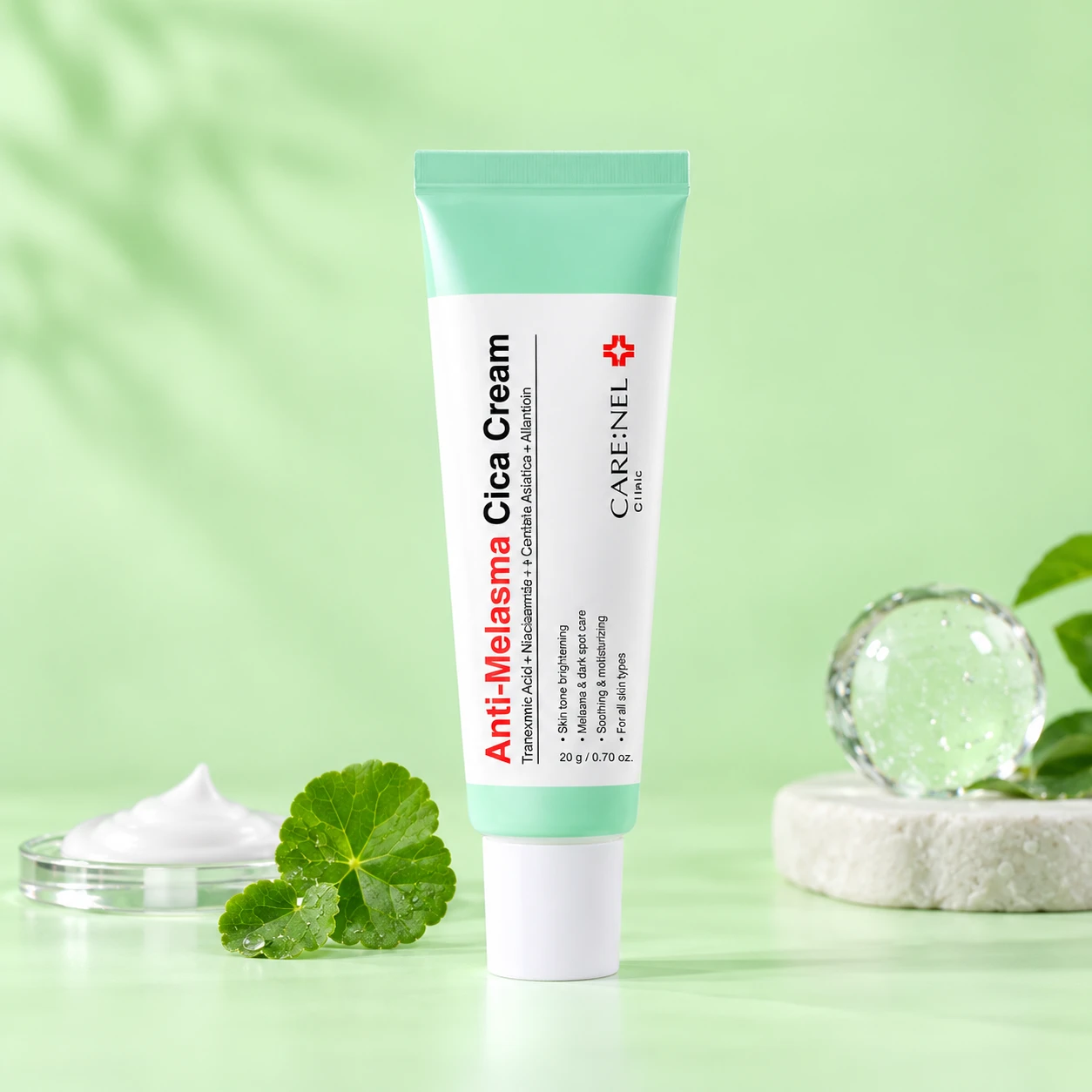
CARENEL Anti-Melasma Cica Cream Price in Bangladesh – Korean Brightening Cream for Melasma & Dark Spots (40ml)
Searching for the original CARENEL Anti-Melasma Cica Cream price in Bangladesh? CARE:NEL Anti-Melasma Cica Cream (40ml) is a Korean brightening and soothing cream formulated to target the appearance of melasma, dark spots and uneven skin tone. It combines tranexamic acid and niacinamide with centella asiatica (cica) to brighten while keeping the skin calm and hydrated. Buy the authentic product from Derma.com.bd at a competitive price, with fast delivery in Dhaka and home delivery across Bangladesh.
Melasma and stubborn pigmentation are among the most common skin concerns in Bangladesh, especially among women. This guide explains what melasma is, how the ingredients in CARE:NEL work, how to use the cream for the best results, and what else you can do to keep pigmentation under control.
What Is Melasma?
Melasma is a common pigmentation disorder that causes brown or greyish-brown patches, usually on the cheeks, forehead, nose bridge, upper lip and chin. The patches are often symmetrical on both sides of the face. It is much more common in women and in people with medium to darker skin tones, such as South Asian skin.
Melasma is triggered by a combination of factors:
- Sun exposure: UV and visible light are the strongest triggers and can quickly darken patches.
- Hormones: Pregnancy, birth control pills and hormonal therapy are well-known triggers. Melasma during pregnancy is often called the "mask of pregnancy".
- Genetics: It often runs in families.
- Heat: Heat from cooking, hot climates and saunas may worsen melasma.
- Irritating skincare: Products that inflame the skin can make pigmentation worse.
Melasma is a chronic condition. It can be improved and controlled, but it tends to return if sun protection and maintenance care are stopped. For a reliable medical overview, see the DermNet melasma guide and the American Academy of Dermatology melasma overview.
About CARE:NEL
CARE:NEL is a Korean skincare brand known for targeted treatment products for pigmentation and sensitive skin, combining brightening actives with soothing ingredients. Explore more on our CARE:NEL brand page. The Anti-Melasma Cica line is the brand's signature range, and the cream is its most popular product.
Key Ingredients and How They Work
Tranexamic Acid
Tranexamic acid is one of the most talked-about ingredients for melasma. Applied to the skin, it is thought to interfere with signals that stimulate pigment cells, particularly those triggered by UV exposure and inflammation. It is well suited for hyperpigmentation, discoloration and melasma, and is generally gentle compared with stronger depigmenting agents.
Niacinamide
Niacinamide (vitamin B3) reduces the transfer of pigment from melanocytes to the surface skin cells, helping dark spots and uneven tone look lighter over time. It also supports the skin barrier by boosting ceramides, calms redness and helps balance oil.
Centella Asiatica (Cica) and Madecassoside
Centella asiatica is a traditional healing herb widely used in Korean skincare. Its active compounds, including madecassoside, have soothing, anti-inflammatory and antioxidant properties. Because inflammation can trigger more pigment, keeping the skin calm is an important part of controlling melasma.
Glycerin and Shea Butter
Glycerin draws moisture into the skin, while shea butter softens and helps lock in hydration. Together they keep the skin comfortable so the brightening actives can be used daily.
Benefits of CARE:NEL Anti-Melasma Cica Cream
- Targets the appearance of melasma, dark spots and pigmentation
- Helps even out skin tone and improve radiance
- Soothes redness and irritation with centella asiatica
- Supports a healthy skin barrier
- Hydrates without feeling heavy
- Gentle enough for daily use for most skin types
- Can be combined with other routine steps and sunscreen
Who Should Use It?
- People with melasma or hormonal pigmentation patches
- Those with post-acne marks and sun spots
- People with dull, uneven skin tone
- Sensitive skin that cannot tolerate harsh bleaching creams
- Anyone looking for a maintenance cream after dermatologist-prescribed melasma treatment
Note: The formula contains fragrance. If your skin is allergic to fragrance, do a patch test first or choose a fragrance-free alternative.
How to Use CARE:NEL Anti-Melasma Cica Cream
- Cleanse your face with a gentle cleanser.
- Apply toner or serum if you use them. CARE:NEL's matching serum or toner can be layered underneath.
- Take an appropriate amount of cream and apply evenly over the whole face, paying extra attention to pigmented areas.
- Gently pat until absorbed.
- Use morning and evening. Always finish your morning routine with a broad-spectrum sunscreen.
Tip: Apply the cream to the whole face, not only the dark patches. Melasma is often more widespread than what is visible, and even application helps prevent a patchy result.
How Long Until You See Results?
Pigmentation fades slowly because the skin needs time to shed pigmented cells. Many people notice a brighter, more even look after 4–6 weeks, with more visible improvement after 8–12 weeks of consistent twice-daily use and strict sun protection. Melasma can be stubborn; if you see no improvement after three months, or if patches are very dark, consult a dermatologist.
Sun Protection: The Most Important Step
For melasma, sunscreen is not optional. Even a few minutes of unprotected sun can undo weeks of progress. Use a broad-spectrum sunscreen with SPF 50 every day, ideally a tinted sunscreen containing iron oxides, which also protects against visible light. Reapply every two to three hours outdoors, wear a wide-brimmed hat or carry an umbrella, and try to avoid direct sun between 10am and 4pm.
Combining With Other Treatments
For mild pigmentation, CARE:NEL cream with sunscreen may be enough. For moderate to severe melasma, dermatologists may prescribe stronger options, such as triple-combination creams like Triluma, which contain hydroquinone, tretinoin and a steroid. These should only be used for limited periods under medical supervision. CARE:NEL can be a gentle maintenance cream between or after such courses, if your doctor agrees. Other gentle brightening options include the Tyrodin Tranexamic Acid & Kojic Acid Cream and the Dr.Althea 345 Relief Cream.
Lifestyle Tips for Melasma
- Use sunscreen every day, even indoors near windows and on cloudy days.
- Avoid scrubbing, picking or using harsh peels at home.
- Avoid heat exposure where possible, such as standing close to the stove for long periods.
- If you suspect hormonal pills are a trigger, discuss alternatives with your doctor.
- Choose gentle, non-irritating skincare.
- Be patient and consistent; melasma management is long-term.
Melasma vs Other Types of Dark Spots
Not every brown patch is melasma, and understanding the difference helps you choose the right treatment:
- Melasma: Larger, symmetrical patches on the cheeks, forehead, upper lip or nose, often linked to hormones and sun. Tends to recur.
- Post-inflammatory hyperpigmentation (PIH): Flat marks left after pimples, insect bites, rashes or injuries. Usually fades over months with sun protection and brightening care.
- Sun spots (solar lentigines): Well-defined brown spots on sun-exposed areas, more common with age.
- Freckles: Small, scattered spots that darken in the sun.
- Tanning: Overall darkening of exposed skin after sun exposure.
CARE:NEL cream can help with the appearance of several of these, but if a spot changes in size, shape or colour, bleeds or itches, see a doctor promptly.
Types of Melasma
Dermatologists often describe melasma by depth. Epidermal melasma sits in the upper layer of the skin, has well-defined borders and usually responds best to topical treatment. Dermal melasma is deeper, appears more bluish-grey and is harder to treat. Mixed melasma, the most common type, has features of both. A dermatologist can assess your melasma, sometimes using a special lamp, and recommend a suitable plan. Topical brighteners like tranexamic acid and niacinamide are a good foundation for all types, especially for long-term maintenance.
Why Gentle Treatment Matters for Brown Skin
South Asian skin is prone to developing extra pigment whenever it is irritated. This means that aggressive treatments, such as strong home peels, harsh scrubs or unregulated "fairness" creams containing hidden steroids or mercury, can actually make pigmentation worse and cause thinning, redness and other damage. A gentle, barrier-friendly approach is safer and more sustainable. CARE:NEL's combination of brightening actives with soothing cica is designed around this principle: improve pigment while keeping inflammation low.
A Simple Anti-Melasma Routine
Morning: Gentle cleanser → CARE:NEL Anti-Melasma Cica Cream → broad-spectrum, preferably tinted, sunscreen SPF 50.
Evening: Cleanser → prescribed treatment if any → CARE:NEL Anti-Melasma Cica Cream.
Weekly: Take photos in the same light every two weeks to track progress objectively.
Precautions
- For external use only. Avoid the eyes and mucous membranes.
- Patch test before first use, especially if you have sensitive or allergy-prone skin, as the formula contains fragrance.
- Stop use if irritation, itching or rash occurs.
- If you are pregnant or breastfeeding, consult your doctor before starting any pigmentation treatment.
- Store in a cool, dry place away from direct sunlight.
- Keep out of reach of children.
Melasma During and After Pregnancy
Many women first notice melasma during pregnancy, when hormone levels rise. In some cases it fades on its own within months after delivery, while in others it persists. During pregnancy and breastfeeding, strict sun protection is the safest first step, and any treatment should be discussed with your doctor. After pregnancy, gentle brightening creams can be introduced with medical approval.
How to Spot a Genuine Product
Korean skincare is frequently counterfeited. Check that the box is sealed, the printing is sharp, and the batch number and expiry date are clearly visible. The cream should have a uniform texture and a consistent scent. Avoid sellers offering prices far below the market rate, and buy from trusted stores like Derma.com.bd.
Why Buy From Derma.com.bd?
- 100% original CARE:NEL products
- Competitive CARENEL Anti-Melasma Cica Cream price in Bangladesh
- Fast delivery in Dhaka and nationwide
- Cash on delivery
- Products stored correctly with checked expiry dates
The current price is shown at the top of this page. Explore more options in our dark spots and hyperpigmentation collection.
Frequently Asked Questions
What is the CARENEL Anti-Melasma Cica Cream price in Bangladesh?
See the top of this page for the latest price of the original 40ml cream.
Can it cure melasma permanently?
No cream can cure melasma permanently. It can help improve the appearance of patches, and with sun protection the results can be maintained.
Can I use it twice a day?
Yes, morning and night, followed by sunscreen in the morning.
Is it suitable for sensitive skin?
It contains soothing cica, but also fragrance. Patch test first.
Can men use it?
Yes, it is suitable for men and women.
Does it contain hydroquinone or steroids?
No. It relies on tranexamic acid and niacinamide, which are gentler options.
Can I use it with tretinoin?
Yes, many people use a gentle brightening cream alongside retinoids, but introduce products slowly and follow your dermatologist's advice.
Is it suitable for oily or acne-prone skin?
Yes. Niacinamide helps balance oil and calm breakouts, and the cream absorbs well. People prone to fungal acne should note that it contains shea butter and fatty ingredients, which may not suit them.
How long does a 40ml tube last?
With twice-daily use on the face, it typically lasts around six to eight weeks.
Will my melasma come back if I stop?
Melasma often returns if sun protection and maintenance care are stopped. Continuing sunscreen and a gentle brightening routine helps keep results.
Product Details
- Product: CARE:NEL Anti-Melasma Cica Cream
- Brand: CARE:NEL (Korea)
- Size: 40ml
- Key ingredients: Tranexamic Acid, Niacinamide, Centella Asiatica, Madecassoside
- Concerns: Melasma, dark spots, uneven tone, redness
Final Words
CARE:NEL Anti-Melasma Cica Cream offers a gentle yet targeted way to brighten melasma and dark spots while keeping the skin calm. Pair it with daily sunscreen and patience for the best results. Order the original CARENEL Anti-Melasma Cica Cream at the best price in Bangladesh from Derma.com.bd today.
Disclaimer: For general information only, not medical advice. Consult a dermatologist for melasma diagnosis and treatment.
CARENEL Anti-Melasma Cica Cream Price in Bangladesh – মেছতা ও কালো দাগের কোরিয়ান ক্রিম (৪০ মি.লি.)
বাংলাদেশে অরিজিনাল CARENEL Anti-Melasma Cica Cream-এর দাম খুঁজছেন? কেয়ার:নেল অ্যান্টি-মেলাজমা সিকা ক্রিম (৪০ মি.লি.) একটি কোরিয়ান ব্রাইটেনিং ও প্রশান্তিদায়ক ক্রিম, যা মেছতা (মেলাজমা), কালো দাগ ও অসমান ত্বকের রং কমাতে তৈরি। এতে আছে ট্রানেক্সামিক অ্যাসিড ও নিয়াসিনামাইড, সাথে সেন্টেলা এশিয়াটিকা (সিকা), যা ত্বক উজ্জ্বল করার পাশাপাশি শান্ত ও আর্দ্র রাখে। Derma.com.bd থেকে অরিজিনাল প্রোডাক্টটি সাশ্রয়ী দামে কিনুন, ঢাকায় দ্রুত ও সারা দেশে হোম ডেলিভারিসহ।
মেছতা (মেলাজমা) কী?
মেছতা হলো ত্বকের একটি সাধারণ পিগমেন্টেশন সমস্যা, যাতে গাল, কপাল, নাকের ওপর, ঠোঁটের ওপরে ও থুতনিতে বাদামি বা ধূসর-বাদামি ছোপ পড়ে। সাধারণত মুখের দুই পাশে একইভাবে দেখা যায়। নারীদের এবং দক্ষিণ এশীয়দের মতো মাঝারি থেকে গাঢ় ত্বকের মানুষের মধ্যে এটি বেশি হয়।
মেছতার কারণ:
- রোদ: সবচেয়ে বড় কারণ, অল্প রোদেও ছোপ গাঢ় হয়।
- হরমোন: গর্ভাবস্থা, জন্মনিয়ন্ত্রণ পিল ও হরমোন থেরাপি।
- বংশগত: পরিবারে থাকলে ঝুঁকি বেশি।
- তাপ: রান্নার চুলার তাপ ও গরম আবহাওয়া।
- কড়া প্রসাধনী: ত্বকে জ্বালা হলে পিগমেন্ট বাড়ে।
মেছতা দীর্ঘমেয়াদি সমস্যা, নিয়ন্ত্রণ করা যায় কিন্তু সানস্ক্রিন ও যত্ন বন্ধ করলে আবার ফিরে আসতে পারে। বিস্তারিত জানুন DermNet ও American Academy of Dermatology থেকে।
কেয়ার:নেল সম্পর্কে
কেয়ার:নেল একটি কোরিয়ান ব্র্যান্ড, যারা পিগমেন্টেশন ও সংবেদনশীল ত্বকের জন্য ব্রাইটেনিং উপাদানের সাথে প্রশান্তিদায়ক উপাদান মিলিয়ে প্রোডাক্ট তৈরি করে। আরও দেখুন CARE:NEL ব্র্যান্ড পেজে।
মূল উপাদান
- ট্রানেক্সামিক অ্যাসিড: রোদ ও প্রদাহের কারণে পিগমেন্ট কোষ সক্রিয় হওয়ার সংকেত কমাতে সাহায্য করে। মেছতা ও অসমান রঙের জন্য জনপ্রিয় এবং তুলনামূলক মৃদু।
- নিয়াসিনামাইড: পিগমেন্ট ত্বকের উপরিভাগে পৌঁছানো কমায়, ব্যারিয়ার মজবুত করে, লালচেভাব কমায় ও তেল নিয়ন্ত্রণ করে।
- সেন্টেলা এশিয়াটিকা ও ম্যাডেকাসোসাইড: ত্বক শান্ত করে, প্রদাহ কমায়। প্রদাহ কম থাকলে নতুন পিগমেন্টও কম তৈরি হয়।
- গ্লিসারিন ও শিয়া বাটার: আর্দ্রতা দেয় ও ত্বক নরম রাখে।
উপকারিতা
- মেছতা, কালো দাগ ও পিগমেন্টেশন কমাতে সাহায্য করে
- ত্বকের রং সমান ও উজ্জ্বল দেখায়
- সিকা দিয়ে লালচেভাব ও জ্বালা শান্ত করে
- স্কিন ব্যারিয়ার সুস্থ রাখে
- ভারী না হয়ে আর্দ্রতা দেয়
- বেশিরভাগ ত্বকে প্রতিদিন ব্যবহারযোগ্য
- হাইড্রোকুইনোন বা স্টেরয়েড নেই
কারা ব্যবহার করবেন?
- মেছতা বা হরমোনজনিত ছোপ আছে যাদের
- ব্রণের দাগ ও রোদে পোড়া দাগ
- নিস্তেজ, অসমান রঙের ত্বক
- কড়া ব্লিচিং ক্রিম সহ্য করতে পারেন না এমন সংবেদনশীল ত্বক
- ডাক্তারের দেওয়া মেছতার চিকিৎসার পর রক্ষণাবেক্ষণের জন্য
লক্ষ্য করুন: ফর্মুলায় সুগন্ধি আছে। সুগন্ধিতে অ্যালার্জি থাকলে আগে প্যাচ টেস্ট করুন।
ব্যবহারের নিয়ম
- মৃদু ক্লিনজার দিয়ে মুখ পরিষ্কার করুন।
- টোনার বা সিরাম ব্যবহার করলে আগে লাগান।
- প্রয়োজনমতো ক্রিম পুরো মুখে সমানভাবে লাগান, দাগের জায়গায় একটু বেশি খেয়াল রাখুন।
- আলতো চাপ দিয়ে মিশিয়ে দিন।
- সকাল ও রাতে ব্যবহার করুন, সকালে অবশ্যই সানস্ক্রিন দিন।
শুধু দাগের ওপর নয়, পুরো মুখে লাগান, কারণ মেছতা প্রায়ই দৃশ্যমান অংশের চেয়ে বেশি জায়গা জুড়ে থাকে।
কত দিনে ফল পাবেন?
পিগমেন্ট ধীরে কমে। অনেকে ৪–৬ সপ্তাহে উজ্জ্বলতা টের পান, আর ৮–১২ সপ্তাহ নিয়মিত ব্যবহার ও কঠোর সানস্ক্রিনে আরও স্পষ্ট উন্নতি দেখা যায়। তিন মাসেও উন্নতি না হলে চর্মরোগ বিশেষজ্ঞ দেখান।
সানস্ক্রিন: সবচেয়ে গুরুত্বপূর্ণ ধাপ
মেছতায় সানস্ক্রিন বাধ্যতামূলক। কয়েক মিনিটের রোদেও সপ্তাহের অগ্রগতি নষ্ট হতে পারে। প্রতিদিন SPF 50 ব্রড-স্পেকট্রাম, সম্ভব হলে টিন্টেড সানস্ক্রিন ব্যবহার করুন। বাইরে থাকলে ২–৩ ঘণ্টা পরপর আবার লাগান, ছাতা বা চওড়া কিনারার টুপি ব্যবহার করুন।
অন্যান্য চিকিৎসার সাথে
মাঝারি থেকে গুরুতর মেছতায় চর্মরোগ বিশেষজ্ঞরা Triluma-এর মতো ট্রিপল কম্বিনেশন ক্রিম দিতে পারেন, যা শুধু ডাক্তারের তত্ত্বাবধানে স্বল্প সময়ের জন্য ব্যবহার করতে হয়। এর মাঝে বা পরে রক্ষণাবেক্ষণ ক্রিম হিসেবে কেয়ার:নেল ব্যবহার করা যায়, ডাক্তারের সম্মতিতে। অন্যান্য মৃদু বিকল্প: Tyrodin ক্রিম ও Dr.Althea 345 Relief Cream।
বাদামি ত্বকে কেন মৃদু চিকিৎসা জরুরি?
দক্ষিণ এশীয় ত্বকে জ্বালা হলেই বাড়তি পিগমেন্ট তৈরি হয়। তাই ঘরে কড়া পিলিং, স্ক্রাব বা লুকানো স্টেরয়েড বা পারদযুক্ত অনিয়ন্ত্রিত ফর্সাকারী ক্রিম দাগ আরও বাড়াতে এবং ত্বক পাতলা করতে পারে। কেয়ার:নেল ব্রাইটেনিং উপাদানের সাথে সিকা মিলিয়ে প্রদাহ কম রেখে কাজ করে।
মেছতা নিয়ন্ত্রণে জীবনযাপন
- ঘরে জানালার পাশে বা মেঘলা দিনেও সানস্ক্রিন ব্যবহার করুন।
- দাগ খোঁটা, ঘষা বা ঘরে কড়া পিল করবেন না।
- দীর্ঘক্ষণ চুলার তাপে থাকা এড়িয়ে চলুন।
- হরমোন পিল কারণ মনে হলে ডাক্তারের সাথে বিকল্প নিয়ে কথা বলুন।
- ধৈর্য ধরুন, মেছতার যত্ন দীর্ঘমেয়াদি।
মেছতা বনাম অন্যান্য কালো দাগ
- মেছতা: গাল, কপাল, ঠোঁটের ওপর বা নাকে বড়, দুই পাশে একই রকম ছোপ, হরমোন ও রোদের সাথে সম্পর্কিত এবং বারবার ফিরে আসে।
- ব্রণের দাগ (PIH): ব্রণ, পোকার কামড় বা আঘাতের পর থাকা সমতল দাগ, সানস্ক্রিন ও যত্নে কয়েক মাসে কমে।
- রোদের দাগ: রোদে থাকা জায়গায় স্পষ্ট বাদামি দাগ, বয়সের সাথে বাড়ে।
- মেচেতা বা ফ্রেকলস: ছোট ছোট ছড়ানো দাগ, রোদে গাঢ় হয়।
- ট্যান: রোদে খোলা ত্বকের সার্বিক কালচে ভাব।
কোনো দাগের আকার, আকৃতি বা রং বদলালে, রক্ত পড়লে বা চুলকালে দ্রুত ডাক্তার দেখান।
গর্ভাবস্থায় ও পরে মেছতা
অনেক নারী প্রথম গর্ভাবস্থায় মেছতা লক্ষ করেন। কারো ক্ষেত্রে প্রসবের কয়েক মাস পর নিজে থেকেই কমে যায়, কারো থেকে যায়। গর্ভাবস্থা ও স্তন্যদানকালে কঠোর সানস্ক্রিনই সবচেয়ে নিরাপদ প্রথম ধাপ, যেকোনো চিকিৎসা ডাক্তারের সাথে আলোচনা করে শুরু করুন।
সহজ অ্যান্টি-মেছতা রুটিন
সকালে: ক্লিনজার → কেয়ার:নেল ক্রিম → SPF 50 টিন্টেড সানস্ক্রিন।
রাতে: ক্লিনজার → ডাক্তারের দেওয়া চিকিৎসা (যদি থাকে) → কেয়ার:নেল ক্রিম।
প্রতি দুই সপ্তাহে: একই আলোতে ছবি তুলে অগ্রগতি মিলিয়ে দেখুন।
সতর্কতা
- শুধু বাহ্যিক ব্যবহারের জন্য, চোখে লাগাবেন না।
- প্রথমবার প্যাচ টেস্ট করুন।
- জ্বালা, চুলকানি বা র্যাশ হলে ব্যবহার বন্ধ করুন।
- গর্ভাবস্থা বা স্তন্যদানকালে ডাক্তারের পরামর্শ নিন।
- ঠান্ডা, শুকনো জায়গায় রাখুন।
কেন Derma.com.bd?
- ১০০% অরিজিনাল কেয়ার:নেল
- সাশ্রয়ী CARENEL Anti-Melasma Cica Cream price in Bangladesh
- ঢাকায় দ্রুত ও সারা দেশে ডেলিভারি, ক্যাশ অন ডেলিভারি
আরও দেখুন ডার্ক স্পটস ও হাইপারপিগমেন্টেশন কালেকশন।
সাধারণ জিজ্ঞাসা
বাংলাদেশে কেয়ার:নেল ক্রিমের দাম কত?
সর্বশেষ দাম এই পেজের উপরে দেখুন।
এটি কি মেছতা স্থায়ীভাবে দূর করে?
কোনো ক্রিমই মেছতা স্থায়ীভাবে দূর করে না। এটি ছোপ হালকা করতে সাহায্য করে, সানস্ক্রিনসহ ফল ধরে রাখা যায়।
দিনে কয়বার?
সকাল ও রাতে দুবার।
এতে কি হাইড্রোকুইনোন বা স্টেরয়েড আছে?
না, এতে ট্রানেক্সামিক অ্যাসিড ও নিয়াসিনামাইডের মতো মৃদু উপাদান আছে।
ছেলেরা ব্যবহার করতে পারবে?
হ্যাঁ।
একটি টিউব কত দিন চলে?
দিনে দুবার মুখে ব্যবহারে প্রায় ৬–৮ সপ্তাহ।
তৈলাক্ত বা ব্রণপ্রবণ ত্বকে চলবে?
হ্যাঁ, নিয়াসিনামাইড তেল নিয়ন্ত্রণ ও ব্রণ শান্ত করতে সাহায্য করে। তবে ফাঙ্গাল অ্যাকনে প্রবণ হলে শিয়া বাটার থাকায় সাবধান থাকুন।
বন্ধ করলে কি মেছতা ফিরে আসবে?
সানস্ক্রিন ও রক্ষণাবেক্ষণ বন্ধ করলে মেছতা প্রায়ই ফিরে আসে। তাই সানস্ক্রিন ও মৃদু ব্রাইটেনিং রুটিন চালিয়ে যান।
দ্রষ্টব্য: সাধারণ তথ্যের জন্য। মেছতার রোগনির্ণয় ও চিকিৎসার জন্য চর্মরোগ বিশেষজ্ঞের পরামর্শ নিন।
Write a Review
Customer Reviews (0)
No reviews yet. Be the first to review this product!