
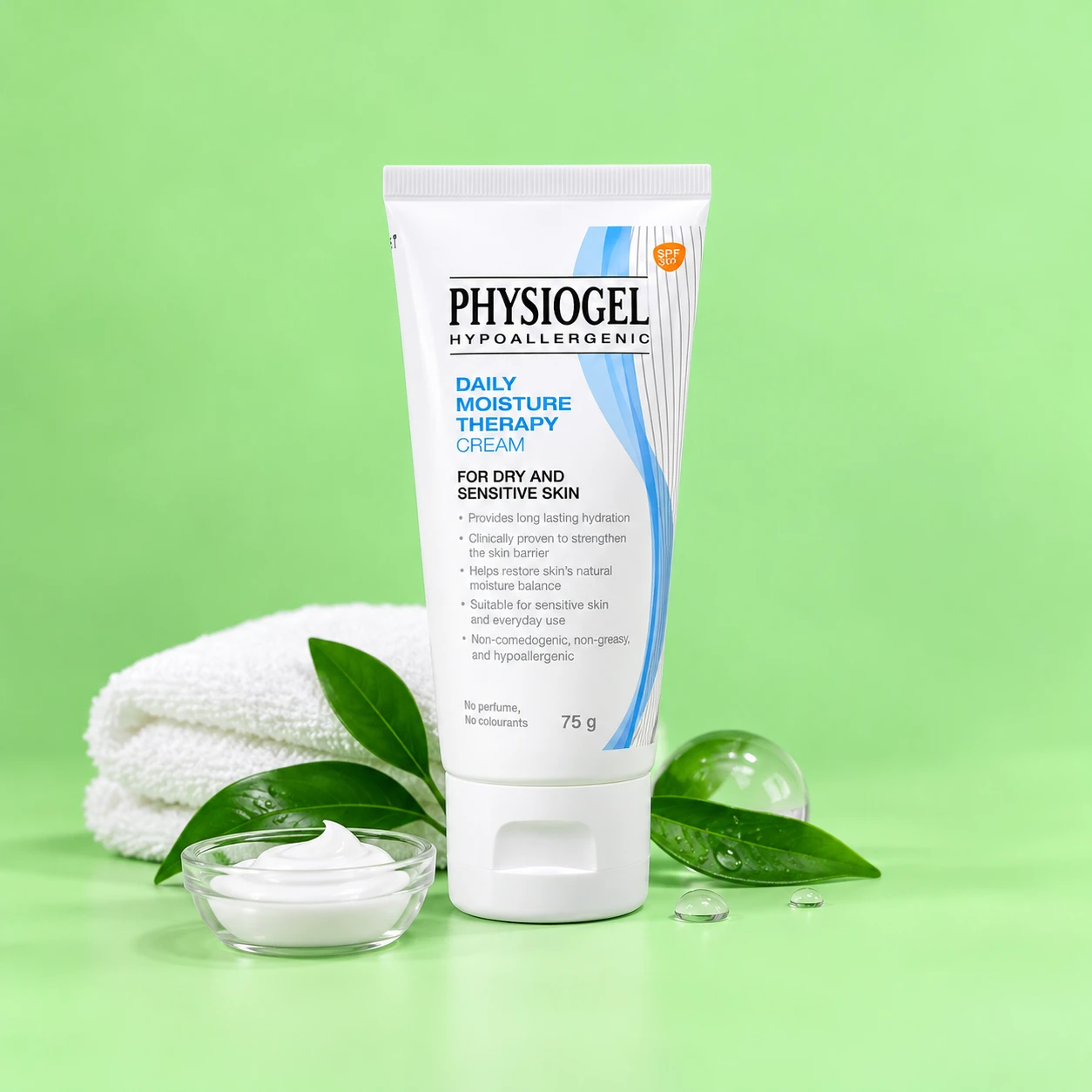
Physiogel Daily Moisture Therapy Cream Price in Bangladesh – Hypoallergenic Cream for Dry, Sensitive Skin (75g)
Searching for the genuine Physiogel Daily Moisture Therapy Cream price in Bangladesh? Physiogel Hypoallergenic Daily Moisture Therapy Cream (75g) is a dermatologist-recommended moisturiser designed for dry and sensitive skin. Built around a skin-mimicking lipid formula, it helps restore moisture, strengthen the skin barrier and keep sensitive skin calm and comfortable all day. At Derma.com.bd you can buy the original 75g tube at a competitive price, with fast delivery in Dhaka and home delivery throughout Bangladesh.
This detailed guide explains how Physiogel works, who it suits, how to use it for best results, and how it compares with other moisturisers. If your skin often feels tight, rough, flaky or itchy, read on to find out whether Physiogel is the right moisturiser for you.
What Is Physiogel Daily Moisture Therapy Cream?
Physiogel is an internationally recognised skincare brand developed for dry, sensitive skin and widely recommended by dermatologists. Explore more on our Physiogel brand page. The Daily Moisture Therapy Cream is the brand's best-known product. It is a rich yet non-greasy cream that is suitable for the face and body, and is designed to hydrate deeply while supporting the skin's natural protective layer.
The formula is hypoallergenic and fragrance-free, which means it is designed to minimise the risk of allergic reactions. That makes it a popular choice for people whose skin reacts to perfumed or heavily formulated creams.
The Science Behind Physiogel: Skin-Mimicking Lipids
The outermost layer of your skin, the stratum corneum, is made of skin cells held together by a mixture of lipids, mainly ceramides, cholesterol and free fatty acids. These lipids are arranged in an organised, layered structure that keeps water in and irritants out. In dry and sensitive skin, this lipid structure is often damaged or deficient, so moisture escapes and the skin becomes rough, tight and easily irritated.
Physiogel is based on a biomimetic approach: its lipid structure is designed to resemble the natural lipid layers of healthy skin. Instead of simply sitting on top of the skin as a greasy film, it is designed to integrate with the skin's own barrier, helping to replenish missing lipids and restore balance. Key components include skin-friendly emollients such as squalane, humectants such as glycerin that attract water, and lipid-like ingredients that support barrier function. Always check the full ingredient list on the pack.
To understand more about how moisturisers help dry skin, see the American Academy of Dermatology tips for relieving dry skin.
Benefits of Physiogel Daily Moisture Therapy Cream
- Provides long-lasting hydration for dry and very dry skin
- Helps repair and strengthen the skin's natural barrier
- Reduces tightness, roughness and flaking
- Hypoallergenic and fragrance-free formula
- Gentle on sensitive and easily irritated skin
- Absorbs well without leaving a heavy, greasy residue
- Suitable for face and body
- Can be used daily by adults and children
- Works well as a comforting moisturiser alongside drying treatments
Who Should Use Physiogel?
- Dry and very dry skin that feels tight after washing
- Sensitive skin that reacts to fragrance and harsh products
- Eczema-prone skin, as part of a routine guided by a doctor
- People using acne or anti-ageing treatments such as tretinoin, adapalene or benzoyl peroxide, which can cause dryness and peeling
- Skin exposed to air-conditioning for long hours
- Winter dryness, when Bangladesh's air becomes cooler and drier
- Children and adults needing a gentle, simple moisturiser
How to Use Physiogel Daily Moisture Therapy Cream
- Cleanse your face or body with a gentle, soap-free cleanser.
- Gently pat the skin dry, leaving it slightly damp.
- Take an appropriate amount of cream and apply evenly to the face and/or body.
- Massage gently until absorbed.
- Use once or twice daily, or more often on very dry areas.
- In the morning, follow with sunscreen on the face.
Tip: Applying moisturiser within three minutes of bathing helps trap water in the skin and boosts hydration.
Physiogel in Your Skincare Routine
Morning: Gentle cleanser → serum (optional) → Physiogel cream → sunscreen.
Night: Gentle cleanser → treatment (if prescribed) → Physiogel cream.
If you are using a strong treatment such as tretinoin, a common approach is to apply the treatment first, wait for it to absorb, then apply Physiogel. Some dermatologists also recommend the "sandwich" method: a thin layer of moisturiser, then the treatment, then another layer of moisturiser, to reduce irritation. Follow your doctor's advice.
Understanding Dry and Sensitive Skin
What causes dry skin?
- Genetics and naturally low oil production
- Frequent washing with harsh soaps
- Long, hot showers
- Cold, dry winter air and air-conditioning
- Ageing, as the skin produces fewer lipids over time
- Skin conditions such as eczema or psoriasis
- Medicated treatments that dry the skin
Signs your skin barrier is struggling
- Tightness, especially after washing
- Flaking, rough patches or fine lines that look more visible
- Itching
- Stinging when you apply products
- Redness and sensitivity
A barrier-supporting moisturiser like Physiogel, used consistently, can help relieve these symptoms and make the skin more resilient over time.
Physiogel and Eczema-Prone Skin
Regular use of emollients is one of the most important parts of managing atopic eczema. Moisturisers help reduce dryness and itching and may reduce the frequency of flare-ups. Physiogel's hypoallergenic, fragrance-free formula makes it suitable for many people with eczema-prone skin. However, eczema should be diagnosed and managed by a doctor, and active flares may need prescription treatment. The NHS eczema treatment guide explains the role of emollients in detail.
Tips for Healthier, More Hydrated Skin
- Use lukewarm water rather than hot water.
- Limit showers to around 10 minutes.
- Choose a gentle, soap-free cleanser.
- Moisturise straight after bathing.
- Avoid scrubbing or using harsh exfoliants on dry skin.
- Wear soft, breathable cotton clothing.
- Drink enough water and eat a balanced diet with healthy fats.
- Use a humidifier in very dry, air-conditioned rooms if possible.
Why Fragrance-Free and Hypoallergenic Matters
Fragrance is one of the most common causes of skin irritation and allergic contact dermatitis. Perfumes added to creams can make a product smell pleasant, but for sensitive skin they often cause stinging, redness, itching or rashes. A hypoallergenic, fragrance-free cream reduces this risk. For people with eczema, rosacea, very dry skin or skin that has been weakened by strong treatments, choosing a product without unnecessary additives can be the difference between comfort and constant irritation. Physiogel's minimal approach means your skin gets what it needs for hydration and barrier repair, without extra ingredients that serve no purpose for skin health.
Using Physiogel Through the Seasons in Bangladesh
Winter (November to February)
This is when most people notice dry, tight and flaky skin. Cooler air holds less moisture, and many people take hotter showers. Apply Physiogel twice daily on the face and after every bath on the body. Pay extra attention to the elbows, knees, shins, hands and heels, which tend to become rough.
Summer (March to June)
In hot weather you may need less moisturiser, but long hours in air-conditioned offices and cars can still dry the skin. Use a thin layer on the face once or twice daily, and focus body application on areas that feel dry.
Monsoon (June to October)
High humidity can make skin feel oily, but sensitive skin may still be dehydrated, especially if you use drying acne products. A light layer of Physiogel at night can help maintain balance without feeling heavy.
Face Use vs Body Use
On the face, a small amount (about the size of a large pea to a small almond) is usually enough. Apply in thin layers and allow it to absorb before sunscreen or makeup. On the body, use more generous amounts after bathing, smoothing the cream in the direction of hair growth to reduce the chance of blocked hair follicles. For very dry hands, apply after every hand wash and at bedtime. Some people like to apply a thicker layer on their hands and feet at night and wear cotton gloves or socks to boost hydration.
How to Spot a Genuine Product
- Check that the packaging is clean, sealed and clearly printed.
- Look for the batch number, manufacturing date and expiry date.
- Be cautious of prices that seem far too low compared with trusted stores.
- The cream should have a consistent texture and no unusual smell.
- Buy from reputable sellers like Derma.com.bd that source products through reliable channels.
Precautions
- For external use only.
- Avoid direct contact with the eyes.
- Do not apply to infected or severely broken skin without medical advice.
- If irritation or rash develops, stop use and consult a doctor.
- Store below 25°C in a dry place, away from direct sunlight.
- Keep out of reach of children.
Physiogel vs Other Moisturisers
Many moisturisers in the market contain fragrance, colourants or heavy oils that can irritate sensitive skin or feel uncomfortable in a humid climate. Physiogel focuses on a simple, hypoallergenic formula and barrier repair, making it suitable for people who need effective moisture without irritation. For a lighter, gel-based option for oily but dehydrated skin, consider the Hyalugel Hyaluronic Acid Gel. For very dry, rough skin, the Emolene Cream is another option. Browse our full dry and sensitive skin collection for more.
Why Buy From Derma.com.bd?
- 100% original Physiogel products
- Competitive Physiogel cream price in Bangladesh
- Fast delivery in Dhaka and nationwide home delivery
- Cash on delivery
- Properly stored stock with checked expiry dates
- Helpful customer support
The current price is shown at the top of this page.
What to Expect When You Start Using Physiogel
Most users notice immediate comfort: the skin feels softer and less tight soon after application. With consistent daily use over one to two weeks, flakiness and roughness usually reduce and the skin feels more resilient. Over several weeks, a stronger skin barrier may mean fewer episodes of stinging and redness when using other products. Results vary from person to person, and underlying conditions such as eczema may also need medical treatment. Consistency is key: a moisturiser works best when used every day, not only when the skin already feels very dry.
Frequently Asked Questions
What is the Physiogel Daily Moisture Therapy Cream price in Bangladesh?
See the top of this page for the latest price of the original 75g tube.
Can I use Physiogel on my face?
Yes. It is suitable for both face and body.
Is Physiogel suitable for oily skin?
It is designed mainly for dry and sensitive skin. People with oily skin who need extra hydration, for example while using drying acne treatments, may still find it helpful in small amounts, especially at night.
Can children use Physiogel?
Yes, it is generally suitable for children. For babies and infants, consult a paediatrician first.
Does Physiogel help eczema?
It can be used as an emollient in eczema care, alongside the treatment your doctor recommends.
Is it fragrance-free?
Yes, the formula is fragrance-free and hypoallergenic.
Can I use it with tretinoin?
Yes. It is commonly used to reduce dryness and irritation from tretinoin and other retinoids.
How long does a 75g tube last?
For daily face use, it usually lasts around 6–8 weeks. For body use, it will be used up faster.
Product Details
- Product: Physiogel Hypoallergenic Daily Moisture Therapy Cream
- Brand: Physiogel
- Size: 75g
- Skin type: Dry, very dry and sensitive skin
- Features: Hypoallergenic, fragrance-free, skin-mimicking lipid formula
- Use: Face and body
Final Words
If your skin feels dry, tight or sensitive, a gentle barrier-repair moisturiser can make a real difference. Physiogel Daily Moisture Therapy Cream combines hypoallergenic care with long-lasting hydration. Order the original Physiogel Daily Moisture Therapy Cream 75g at the best price in Bangladesh from Derma.com.bd today.
Disclaimer: For general information only, not medical advice. Consult a dermatologist for persistent skin conditions.
Physiogel Daily Moisture Therapy Cream Price in Bangladesh – শুষ্ক ও সংবেদনশীল ত্বকের জন্য ফিজিওজেল ক্রিম (৭৫ গ্রাম)
বাংলাদেশে অরিজিনাল Physiogel Daily Moisture Therapy Cream-এর দাম খুঁজছেন? ফিজিওজেল হাইপোঅ্যালার্জেনিক ডেইলি ময়েশ্চার থেরাপি ক্রিম (৭৫ গ্রাম) শুষ্ক ও সংবেদনশীল ত্বকের জন্য চর্মরোগ বিশেষজ্ঞদের সুপারিশ করা একটি ময়েশ্চারাইজার। ত্বকের প্রাকৃতিক লিপিডের মতো গঠনের ফর্মুলা দিয়ে তৈরি এই ক্রিম ত্বকে আর্দ্রতা ফিরিয়ে আনে, স্কিন ব্যারিয়ার মজবুত করে এবং সারাদিন ত্বককে শান্ত ও আরামদায়ক রাখে। Derma.com.bd থেকে অরিজিনাল ৭৫ গ্রাম টিউবটি সাশ্রয়ী দামে কিনুন, ঢাকায় দ্রুত ও সারা দেশে হোম ডেলিভারিসহ।
ফিজিওজেল ক্রিম কী?
ফিজিওজেল আন্তর্জাতিকভাবে পরিচিত একটি স্কিনকেয়ার ব্র্যান্ড, যা শুষ্ক ও সংবেদনশীল ত্বকের জন্য তৈরি এবং চর্মরোগ বিশেষজ্ঞরা ব্যাপকভাবে সুপারিশ করেন। আরও দেখুন Physiogel ব্র্যান্ড পেজে। ডেইলি ময়েশ্চার থেরাপি ক্রিম ব্র্যান্ডটির সবচেয়ে পরিচিত প্রোডাক্ট। এটি সমৃদ্ধ কিন্তু তেলতেলে নয়, মুখ ও শরীর দুই জায়গাতেই ব্যবহার করা যায়। ফর্মুলাটি হাইপোঅ্যালার্জেনিক ও সুগন্ধিমুক্ত, তাই অ্যালার্জির ঝুঁকি কম।
কীভাবে কাজ করে?
ত্বকের বাইরের স্তর কোষ ও লিপিড (সেরামাইড, কোলেস্টেরল ও ফ্যাটি অ্যাসিড) দিয়ে তৈরি, যা আর্দ্রতা ধরে রাখে এবং ক্ষতিকর জিনিস ঢুকতে দেয় না। শুষ্ক ও সংবেদনশীল ত্বকে এই লিপিড স্তর দুর্বল থাকে, তাই আর্দ্রতা বেরিয়ে যায় এবং ত্বক খসখসে, টানটান ও সহজে জ্বালাপোড়া করে।
ফিজিওজেলের লিপিড গঠন সুস্থ ত্বকের প্রাকৃতিক স্তরের মতো করে তৈরি। এটি শুধু ওপরে তেলের আবরণ তৈরি না করে ত্বকের নিজস্ব ব্যারিয়ারের সাথে মিশে ঘাটতি পূরণে সাহায্য করে। এতে স্কোয়ালেনের মতো ইমোলিয়েন্ট ও গ্লিসারিনের মতো আর্দ্রতা ধরে রাখার উপাদান আছে। শুষ্ক ত্বকের যত্নে আরও টিপস: American Academy of Dermatology।
উপকারিতা
- শুষ্ক ও অতিশুষ্ক ত্বকে দীর্ঘস্থায়ী আর্দ্রতা দেয়
- ত্বকের প্রাকৃতিক ব্যারিয়ার মেরামত ও মজবুত করে
- টানটান ভাব, খসখসে ভাব ও চামড়া ওঠা কমায়
- হাইপোঅ্যালার্জেনিক ও সুগন্ধিমুক্ত
- সংবেদনশীল ত্বকে মৃদু
- ভারী তেলতেলে ভাব ছাড়াই শোষিত হয়
- মুখ ও শরীর দুই জায়গায় ব্যবহারযোগ্য
- বড় ও বাচ্চা সবাই প্রতিদিন ব্যবহার করতে পারে
কারা ব্যবহার করবেন?
- মুখ ধোয়ার পর টানটান লাগে এমন শুষ্ক ত্বক
- সুগন্ধি ও কড়া প্রোডাক্টে রিঅ্যাক্ট করা সংবেদনশীল ত্বক
- একজিমাপ্রবণ ত্বক (ডাক্তারের পরামর্শমতো রুটিনে)
- ট্রেটিনয়িন, অ্যাডাপালিন বা বেনজয়েল পারক্সাইড ব্যবহারকারী, যাদের ত্বক শুকিয়ে যায়
- দীর্ঘ সময় এসিতে থাকা মানুষ
- শীতের শুষ্কতায় ভোগা ত্বক
ব্যবহারের নিয়ম
- মৃদু, সাবানমুক্ত ক্লিনজার দিয়ে মুখ বা শরীর পরিষ্কার করুন।
- আলতো করে মুছে ত্বক সামান্য ভেজা রাখুন।
- প্রয়োজনমতো ক্রিম নিয়ে সমানভাবে লাগান।
- আলতো ম্যাসাজ করে মিশিয়ে দিন।
- দিনে এক-দুবার, খুব শুষ্ক জায়গায় আরও বেশিবার ব্যবহার করুন।
- সকালে মুখে শেষে সানস্ক্রিন লাগান।
গোসলের তিন মিনিটের মধ্যে ময়েশ্চারাইজার লাগালে ত্বকে পানি আটকে থাকে এবং আর্দ্রতা বাড়ে।
রুটিনে ফিজিওজেল
সকালে: ক্লিনজার → সিরাম (ঐচ্ছিক) → ফিজিওজেল → সানস্ক্রিন।
রাতে: ক্লিনজার → ডাক্তারের দেওয়া ট্রিটমেন্ট → ফিজিওজেল।
ট্রেটিনয়িনের মতো কড়া ওষুধ ব্যবহার করলে আগে ওষুধ লাগিয়ে শুকাতে দিন, তারপর ফিজিওজেল দিন। অনেক বিশেষজ্ঞ "স্যান্ডউইচ পদ্ধতি" (ময়েশ্চারাইজার → ওষুধ → ময়েশ্চারাইজার) পরামর্শ দেন।
শুষ্ক ত্বকের কারণ
- জন্মগতভাবে কম তেল উৎপাদন
- বারবার কড়া সাবানে ধোয়া
- লম্বা সময় গরম পানিতে গোসল
- শীতের শুষ্ক বাতাস ও এসি
- বয়স বাড়া
- একজিমা বা সোরিয়াসিসের মতো সমস্যা
একজিমাপ্রবণ ত্বকে ফিজিওজেল
একজিমা নিয়ন্ত্রণে নিয়মিত ময়েশ্চারাইজার ব্যবহার সবচেয়ে গুরুত্বপূর্ণ ধাপগুলোর একটি। এটি শুষ্কতা ও চুলকানি কমায় এবং ফ্লেয়ার-আপ কমাতে পারে। তবে একজিমার চিকিৎসা অবশ্যই ডাক্তারের তত্ত্বাবধানে করুন। বিস্তারিত: NHS একজিমা চিকিৎসা গাইড।
সুগন্ধিমুক্ত কেন জরুরি?
সুগন্ধি ত্বকে জ্বালা ও অ্যালার্জির অন্যতম সাধারণ কারণ। সংবেদনশীল ত্বকে সুগন্ধযুক্ত ক্রিম জ্বালা, লালচেভাব বা র্যাশ তৈরি করতে পারে। ফিজিওজেলের সহজ, সুগন্ধিমুক্ত ফর্মুলা এই ঝুঁকি কমায়।
ঋতুভেদে ব্যবহার
শীতে: মুখে দিনে দুবার এবং প্রতিবার গোসলের পর শরীরে লাগান। কনুই, হাঁটু, হাত ও গোড়ালিতে বেশি যত্ন নিন।
গরমে: পাতলা করে লাগান, বিশেষ করে এসিতে থাকলে।
বর্ষায়: রাতে হালকা স্তর যথেষ্ট।
স্কিন ব্যারিয়ার দুর্বল হওয়ার লক্ষণ
- মুখ ধোয়ার পর টানটান লাগা
- খসখসে দাগ বা চামড়া ওঠা, সূক্ষ্ম রেখা বেশি দেখা যাওয়া
- চুলকানি
- যেকোনো প্রোডাক্ট লাগালে জ্বালা করা
- লালচেভাব ও সংবেদনশীলতা
ফিজিওজেলের মতো ব্যারিয়ার-সহায়ক ময়েশ্চারাইজার নিয়মিত ব্যবহারে এসব লক্ষণ কমে এবং ধীরে ধীরে ত্বক আরও সহনশীল হয়ে ওঠে।
ব্যবহার শুরু করলে কী আশা করবেন?
বেশিরভাগ ব্যবহারকারী লাগানোর সাথে সাথেই আরাম অনুভব করেন, ত্বক নরম ও কম টানটান লাগে। এক-দুই সপ্তাহ নিয়মিত ব্যবহারে খসখসে ভাব ও চামড়া ওঠা সাধারণত কমে যায়। কয়েক সপ্তাহ পর মজবুত ব্যারিয়ারের কারণে অন্য প্রোডাক্ট লাগালেও জ্বালা ও লালচেভাব কম হয়। মনে রাখবেন, ময়েশ্চারাইজার শুধু ত্বক শুকিয়ে গেলে নয়, প্রতিদিন ব্যবহার করলেই সবচেয়ে ভালো কাজ করে।
ত্বক আর্দ্র রাখার সহজ টিপস
- গরম পানির বদলে কুসুম গরম পানি ব্যবহার করুন এবং গোসল ১০ মিনিটের মধ্যে সারুন।
- সাবানের বদলে মৃদু, সাবানমুক্ত ক্লিনজার বেছে নিন।
- শুষ্ক ত্বকে স্ক্রাব বা কড়া এক্সফোলিয়েন্ট ব্যবহার করবেন না।
- নরম, সুতি কাপড় পরুন।
- পর্যাপ্ত পানি পান করুন এবং স্বাস্থ্যকর চর্বিযুক্ত সুষম খাবার খান।
- খুব শুষ্ক এসি ঘরে সম্ভব হলে হিউমিডিফায়ার ব্যবহার করুন।
অরিজিনাল প্রোডাক্ট চেনার উপায়
প্যাকেট পরিষ্কার ও সিল করা কিনা, ব্যাচ নম্বর, উৎপাদন ও মেয়াদোত্তীর্ণের তারিখ আছে কিনা দেখুন। বিশ্বস্ত দোকানের তুলনায় অস্বাভাবিক কম দাম হলে সাবধান থাকুন। Derma.com.bd-এর মতো নির্ভরযোগ্য বিক্রেতার কাছ থেকে কিনুন।
সতর্কতা
- শুধু বাহ্যিক ব্যবহারের জন্য, চোখে লাগাবেন না।
- সংক্রমিত বা খুব ক্ষতিগ্রস্ত ত্বকে ডাক্তারের পরামর্শ ছাড়া লাগাবেন না।
- জ্বালা বা র্যাশ হলে ব্যবহার বন্ধ করুন।
- ২৫°C-এর নিচে শুকনো জায়গায় রাখুন।
অন্যান্য বিকল্প
তৈলাক্ত কিন্তু পানিশূন্য ত্বকের জন্য হালকা জেল চাইলে দেখুন Hyalugel হায়ালুরোনিক অ্যাসিড জেল। খুব খসখসে ত্বকের জন্য Emolene ক্রিম। সম্পূর্ণ কালেকশন: ড্রাই ও সেনসিটিভ স্কিন।
কেন Derma.com.bd?
- ১০০% অরিজিনাল ফিজিওজেল
- সাশ্রয়ী Physiogel cream price in Bangladesh
- ঢাকায় দ্রুত ও সারা দেশে ডেলিভারি, ক্যাশ অন ডেলিভারি
- মেয়াদ যাচাই করা প্রোডাক্ট
সাধারণ জিজ্ঞাসা
বাংলাদেশে ফিজিওজেল ক্রিমের দাম কত?
সর্বশেষ দাম এই পেজের উপরে দেখুন।
মুখে ব্যবহার করা যাবে?
হ্যাঁ, মুখ ও শরীর দুই জায়গায় ব্যবহার করা যায়।
তৈলাক্ত ত্বকে চলবে?
এটি মূলত শুষ্ক ও সংবেদনশীল ত্বকের জন্য। ব্রণের ওষুধে ত্বক শুকিয়ে গেলে তৈলাক্ত ত্বকেও রাতে অল্প পরিমাণে ব্যবহার করা যায়।
বাচ্চারা ব্যবহার করতে পারবে?
সাধারণত পারবে। নবজাতক ও ছোট শিশুর ক্ষেত্রে আগে ডাক্তারের পরামর্শ নিন।
ট্রেটিনয়িনের সাথে ব্যবহার করা যাবে?
হ্যাঁ, ট্রেটিনয়িনের শুষ্কতা ও জ্বালা কমাতে এটি প্রায়ই ব্যবহার করা হয়।
একটি টিউব কত দিন চলে?
শুধু মুখে প্রতিদিন ব্যবহারে সাধারণত ৬–৮ সপ্তাহ।
শীতে হাত-পা ফেটে গেলে কি ব্যবহার করা যাবে?
হ্যাঁ। প্রতিবার হাত ধোয়ার পর ও রাতে ঘুমানোর আগে লাগান। রাতে একটু ঘন করে লাগিয়ে সুতি মোজা বা গ্লাভস পরলে আরও ভালো ফল পাবেন। ফাটা থেকে রক্ত পড়লে বা সংক্রমণ হলে ডাক্তার দেখান।
দ্রষ্টব্য: সাধারণ তথ্যের জন্য, চিকিৎসকের পরামর্শের বিকল্প নয়।
Write a Review
Customer Reviews (0)
No reviews yet. Be the first to review this product!