
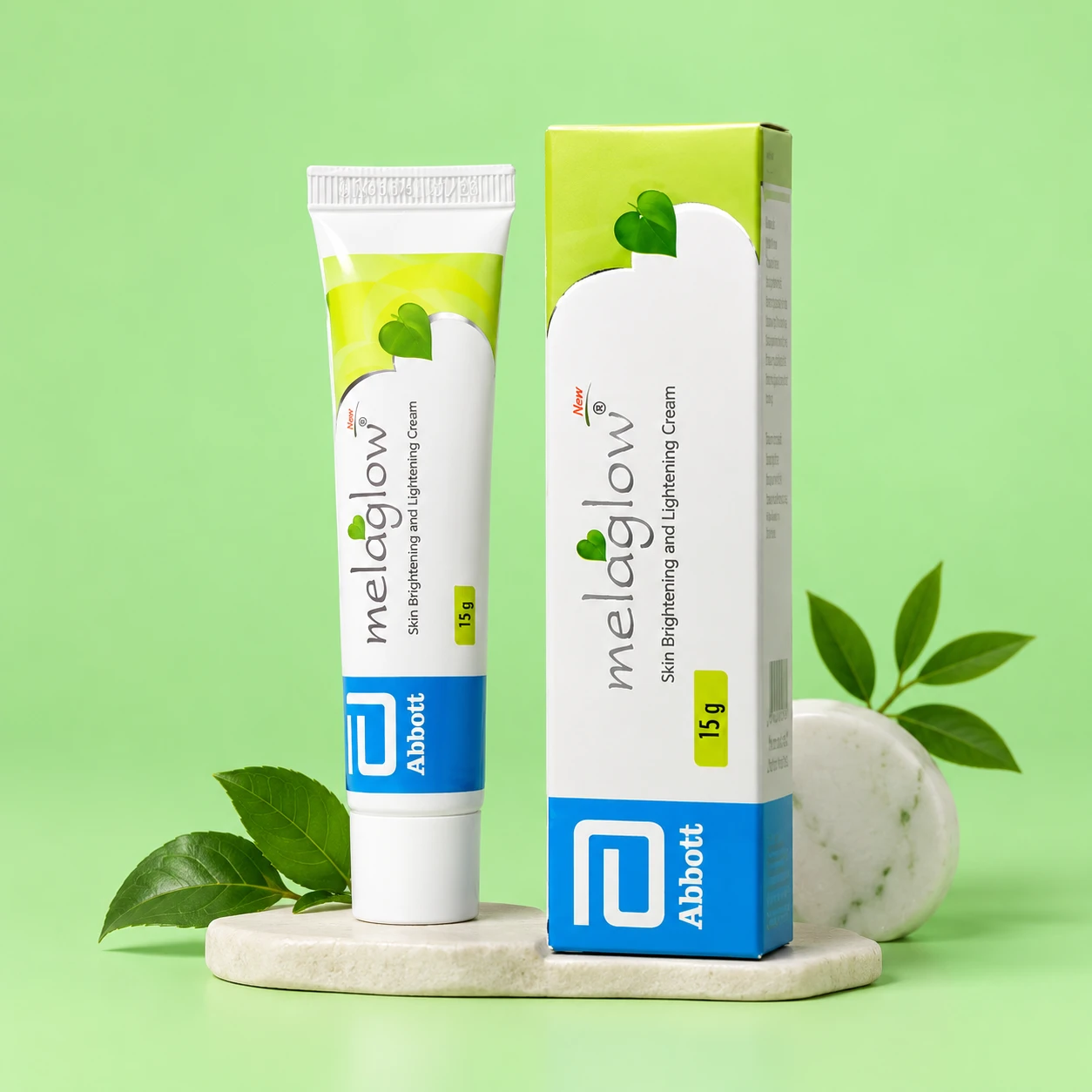
Melaglow Cream Price in Bangladesh – Abbott Melaglow Skin Brightening & Lightening Cream (15g)
Looking for the original Melaglow cream price in Bangladesh? Abbott Melaglow Skin Brightening & Lightening Cream (15g) is a popular dermatologist-recommended, hydroquinone-free brightening cream. It combines kojic acid, niacinamide, soy isoflavones, glabridin from licorice, tetrahydrocurcumin and arbutin, along with a UV filter, to help reduce dark spots, tanning, melasma-type pigmentation and uneven skin tone. Order the authentic product from Derma.com.bd at a competitive price, with fast delivery in Dhaka and nationwide home delivery.
This guide explains each ingredient in Melaglow, how they work together, who the cream suits, how to use it for best results and what else you can do to keep your skin even and radiant.
About Abbott
Abbott is a global healthcare company with a broad range of pharmaceutical and dermatology products. In dermatology, its Melaglow and Melalite ranges are well known for pigmentation care. Explore more on our Abbott brand page.
Key Ingredients in Melaglow
Kojic Acid (around 2%)
A tyrosinase inhibitor that reduces melanin production, helping dark spots fade and preventing new pigmentation.
Niacinamide (around 4%)
Reduces the transfer of pigment to the skin surface, strengthens the skin barrier, calms redness and helps control oil.
Soy Isoflavones
Plant compounds that help even out skin tone and support skin health, often used in brightening formulas.
Glabridin (Licorice Extract)
The active brightening compound in licorice root, known for inhibiting tyrosinase and soothing inflammation.
Tetrahydrocurcumin
A colourless turmeric derivative that acts as a strong antioxidant and brightener without staining the skin.
Arbutin
A gentle, plant-derived brightener that slows pigment formation.
UV Filter
Contains a sunscreen filter for some UV protection, but you should still use a dedicated broad-spectrum sunscreen.
Benefits of Melaglow Cream
- Helps reduce dark spots and blemishes
- Helps lighten tanning and uneven skin tone
- May help mild melasma-type pigmentation
- Fades post-acne marks over time
- Brightens dull skin
- Hydroquinone-free and steroid-free
- Multiple antioxidants and soothing botanicals
- Trusted brand from Abbott
Who Should Use Melaglow?
- People with tanning, dark spots and uneven tone
- Those with post-acne marks
- People with mild pigmentation who prefer a non-hydroquinone option
- As maintenance after a course of stronger pigmentation treatment
- Most skin types, including oily and combination
How to Use Melaglow Cream
- Cleanse your face with a gentle cleanser and pat dry.
- Apply a small amount evenly over the affected areas or the whole face.
- Massage gently until absorbed.
- Use once or twice daily, or as directed by your dermatologist.
- In the morning, finish with a broad-spectrum sunscreen.
Understanding Tanning
Tanning is the skin's natural defence against UV radiation. When sunlight hits the skin, melanocytes produce more melanin to absorb UV rays, darkening the exposed areas. In people with brown skin, this response is strong and fast, so even short daily exposure adds up. Tanning on its own fades over weeks to months if the skin is protected, but repeated exposure keeps it in place and can lead to uneven patches. Brightening creams like Melaglow help by reducing new melanin production and speeding up the fading process, while sunscreen prevents the tan from returning.
Post-Acne Marks
When a pimple heals, inflammation can leave behind a flat brown or dark spot known as post-inflammatory hyperpigmentation. On South Asian skin these marks are very common and can last for months. Melaglow's niacinamide and tyrosinase inhibitors help these marks fade more quickly. For more information, see the DermNet guide to postinflammatory hyperpigmentation. To prevent new marks, treat active acne early, for example with products from our acne collection.
What Results to Expect
Most people notice brighter skin within four weeks, with more visible improvement in dark spots and tone after eight to twelve weeks of consistent use and daily sun protection. Results vary depending on skin type and the cause of pigmentation.
Who Should Be Cautious?
- People with very sensitive skin, rosacea or eczema
- Those with known allergies to kojic acid, licorice or plant extracts
- Pregnant or breastfeeding women, who should consult a doctor first
- Anyone with broken, sunburned or infected skin
Lifestyle Habits for Radiant Skin
- Drink enough water through the day.
- Eat colourful fruits and vegetables rich in antioxidants.
- Sleep seven to eight hours.
- Manage stress and avoid smoking.
- Remove makeup and sunscreen before bed.
Sun Protection Is Essential
Even though Melaglow contains a UV filter, it is not enough on its own in Bangladesh's strong sun. Use a broad-spectrum sunscreen SPF 30–50 every morning, reapply when outdoors, and use umbrellas and hats for extra protection.
How Melaglow's Ingredients Work Together
Pigmentation is a multi-step process. A trigger such as sunlight, heat, hormones or acne inflammation activates pigment cells (melanocytes). Inside them, the enzyme tyrosinase converts building blocks into melanin. The melanin is then packaged and handed over to the surrounding skin cells, which carry it to the surface. Melaglow targets several of these steps. Kojic acid, glabridin and arbutin reduce tyrosinase activity, so less new pigment is produced. Niacinamide limits the transfer of pigment to surface cells. Tetrahydrocurcumin and the other botanicals provide antioxidant protection against the free radicals generated by UV light and pollution, which would otherwise keep stimulating melanocytes. Soy isoflavones contribute to a more even appearance. This combined approach offers balanced brightening without relying on a single harsh ingredient.
Why Choose a Hydroquinone-Free Cream?
Hydroquinone is an effective depigmenting agent, but it is usually recommended only for limited periods under medical supervision because long-term or inappropriate use can cause irritation and, rarely, a bluish-black discoloration called ochronosis. For everyday, longer-term brightening and for maintenance after stronger treatments, many dermatologists prefer hydroquinone-free formulas like Melaglow. The DermNet guide to bleaching agents explains the differences between brightening ingredients.
Common Causes of Uneven Tone in Bangladesh
- Daily sun exposure: Commuting, outdoor work and errands lead to tanning on the face, neck and hands.
- Acne marks: Pimples often leave flat brown marks on South Asian skin.
- Melasma: Hormonal patches, especially in women.
- Heat: Cooking and hot weather can worsen pigmentation.
- Pollution: Contributes to dullness and oxidative stress.
- Harsh products: Strong soaps, scrubs and unregulated creams cause irritation that triggers more pigment.
For more on pigmentation conditions, see the DermNet skin pigmentation guide.
A Simple Brightening Routine With Melaglow
Morning: Gentle cleanser → Melaglow (thin layer) → broad-spectrum sunscreen SPF 30–50.
Night: Gentle cleanser → Melaglow → moisturiser if your skin feels dry.
If you use acne treatments or retinoids, apply them at night and use Melaglow in the morning, or alternate nights, to minimise irritation.
Melaglow as Maintenance Therapy
Dermatologists sometimes prescribe short courses of stronger treatments, such as triple-combination creams like Melacare or hydroquinone creams like Melalite Forte, for stubborn melasma. Because these should not be used long term, a gentle cream like Melaglow is often recommended afterwards to maintain results and prevent relapse. Always follow your doctor's plan when switching between treatments.
Tips for Best Results
- Use Melaglow consistently every day.
- Apply a thin, even layer; more cream does not mean faster results.
- Never skip sunscreen, even on cloudy days.
- Avoid picking pimples and scratching the skin.
- Avoid lemon juice and other harsh home remedies.
- Take photos every two weeks in the same light to track progress.
Precautions
- For external use only. Avoid eyes, lips and broken skin.
- Patch test before first use.
- Stop use if irritation, itching or rash develops.
- Consult your doctor if pregnant or breastfeeding.
- Store in a cool, dry place away from sunlight.
- Keep out of reach of children.
Melaglow 15g vs 30g
The 15g tube is ideal for trying the cream or for treating small areas. If you plan to use it regularly on the whole face, the Melaglow 30g offers better value. For a richer formula with added glow-restoring ingredients, see Melaglow Rich.
Possible Side Effects
Melaglow is generally well tolerated. Some people may experience mild redness, itching, stinging or dryness, especially in the first days or if they have sensitive skin. Kojic acid can occasionally cause contact allergy. If irritation is mild, reduce use to once a day or every other day and apply a moisturiser. If it is severe or persistent, stop and consult a doctor.
Using Melaglow on Neck and Hands
Tanning often affects the neck and the backs of the hands as much as the face. Melaglow can be applied to these areas after a patch test. The neck skin is thinner, so start once daily. Extend your sunscreen to these areas too, as they are easy to forget.
Melaglow vs Other Brightening Creams
Other hydroquinone-free options in our store include Biluma, Eliteglo and NG Glow. For melasma-focused care with tranexamic acid, see Tyrodin. Each formula uses a slightly different combination of ingredients; the best choice depends on your skin's tolerance and your dermatologist's advice.
Seasonal Tips
During summer and the monsoon, apply Melaglow in thin layers and focus on rigorous sun protection, as UV levels are high. In winter, when the skin can become drier, follow with a moisturiser to keep it comfortable and avoid irritation that could trigger pigment.
When to See a Dermatologist
See a dermatologist if pigmentation is spreading, very dark, not improving after three months, or if any spot changes in shape, size or colour, bleeds or itches. A doctor can confirm the diagnosis and suggest stronger options if needed.
How to Spot a Genuine Product
Check that the box and tube are sealed, printed clearly, and show a batch number and expiry date. Buy from trusted sellers like Derma.com.bd to avoid counterfeits.
Why Buy From Derma.com.bd?
- 100% original Abbott Melaglow
- Competitive Melaglow cream price in Bangladesh
- Fast delivery in Dhaka and nationwide
- Cash on delivery
- Products stored properly with checked expiry dates
The current price is shown at the top of this page. Browse our uneven skin tone and tanning collection.
Frequently Asked Questions
What is the Melaglow cream price in Bangladesh?
See the top of this page for the latest price of the original 15g tube.
Does Melaglow contain hydroquinone?
No. It is a hydroquinone-free formula.
Can I use it every day?
Yes, once or twice daily.
Is it good for melasma?
It may help mild melasma. For moderate to severe cases, consult a dermatologist.
Can men use it?
Yes, it suits men and women.
Can I use Melaglow with niacinamide serums?
Melaglow already contains niacinamide, so an extra niacinamide serum is usually unnecessary.
How long does a 15g tube last?
With once-daily face use, around three to four weeks; with twice-daily use, a little less.
Can I use it under makeup?
Yes. Let it absorb, apply sunscreen, then makeup.
Will Melaglow change my natural skin colour?
No. It helps reduce dark spots, tanning and uneven tone, but does not change your natural complexion.
Is it suitable for oily skin?
Yes. Its texture suits most oily and combination skin types, and niacinamide helps balance oil.
When should I stop using it?
Many people continue it as part of a maintenance routine. If you experience persistent irritation, stop and consult a dermatologist.
Can teenagers use it?
Older teenagers with acne marks may use it, but treating active acne and using sunscreen should come first.
Product Details
- Product: Melaglow Skin Brightening & Lightening Cream
- Brand: Abbott
- Size: 15g
- Key ingredients: Kojic Acid, Niacinamide, Soy Isoflavones, Glabridin, Tetrahydrocurcumin, Arbutin
- Concerns: Tanning, dark spots, uneven tone, acne marks
Final Words
Melaglow offers a gentle, hydroquinone-free approach to brighter, more even skin from a trusted brand. Use it consistently with sunscreen. Order the original Melaglow Cream 15g at the best price in Bangladesh from Derma.com.bd today.
Disclaimer: For general information only, not medical advice.
Melaglow Cream Price in Bangladesh – অ্যাবট মেলাগ্লো স্কিন ব্রাইটেনিং ও লাইটেনিং ক্রিম (১৫ গ্রাম)
বাংলাদেশে অরিজিনাল Melaglow ক্রিমের দাম খুঁজছেন? অ্যাবট মেলাগ্লো স্কিন ব্রাইটেনিং ও লাইটেনিং ক্রিম (১৫ গ্রাম) চর্মরোগ বিশেষজ্ঞদের সুপারিশ করা একটি জনপ্রিয় হাইড্রোকুইনোনমুক্ত উজ্জ্বলকারী ক্রিম। এতে আছে কোজিক অ্যাসিড, নিয়াসিনামাইড, সয় আইসোফ্লাভোন, যষ্টিমধুর গ্লাব্রিডিন, টেট্রাহাইড্রোকারকিউমিন ও আরবুটিন, সাথে একটি ইউভি ফিল্টার। এটি কালো দাগ, ট্যান, মেছতার মতো পিগমেন্টেশন ও অসমান ত্বকের রং কমাতে সাহায্য করে। Derma.com.bd থেকে অরিজিনাল প্রোডাক্টটি সাশ্রয়ী দামে অর্ডার করুন, ঢাকায় দ্রুত ও সারা দেশে হোম ডেলিভারি।
অ্যাবট সম্পর্কে
অ্যাবট একটি বৈশ্বিক স্বাস্থ্যসেবা কোম্পানি, যাদের মেলাগ্লো ও মেলালাইট রেঞ্জ পিগমেন্টেশনের যত্নে পরিচিত। আরও দেখুন Abbott ব্র্যান্ড পেজে।
মূল উপাদান
- কোজিক অ্যাসিড (প্রায় ২%): মেলানিন তৈরি কমিয়ে দাগ হালকা করে।
- নিয়াসিনামাইড (প্রায় ৪%): পিগমেন্ট উপরে পৌঁছানো কমায়, ব্যারিয়ার মজবুত করে, লালচেভাব ও তেল কমায়।
- সয় আইসোফ্লাভোন: ত্বকের রং সমান করতে সাহায্য করে।
- গ্লাব্রিডিন (যষ্টিমধু): টাইরোসিনেজ আটকায় ও প্রদাহ শান্ত করে।
- টেট্রাহাইড্রোকারকিউমিন: হলুদের বর্ণহীন রূপ, শক্তিশালী অ্যান্টিঅক্সিডেন্ট।
- আরবুটিন: মৃদুভাবে পিগমেন্ট তৈরি কমায়।
- ইউভি ফিল্টার: কিছুটা রোদ-সুরক্ষা দেয়, তবে আলাদা সানস্ক্রিন জরুরি।
উপাদানগুলো কীভাবে একসাথে কাজ করে
রোদ, তাপ, হরমোন বা ব্রণের প্রদাহে মেলানোসাইট সক্রিয় হয়, টাইরোসিনেজ মেলানিন তৈরি করে এবং তা উপরের কোষে যায়। কোজিক অ্যাসিড, গ্লাব্রিডিন ও আরবুটিন নতুন পিগমেন্ট তৈরি কমায়, নিয়াসিনামাইড স্থানান্তর আটকায়, আর অ্যান্টিঅক্সিডেন্টগুলো রোদ ও দূষণের ফ্রি র্যাডিক্যাল নিষ্ক্রিয় করে। ফলে একক কড়া উপাদান ছাড়াই ভারসাম্যপূর্ণ উজ্জ্বলতা আসে।
উপকারিতা
- কালো দাগ ও ছোপ কমায়
- ট্যান ও অসমান রং হালকা করে
- হালকা মেছতায় সাহায্য করতে পারে
- ব্রণের দাগ ধীরে হালকা করে
- নিস্তেজ ত্বক উজ্জ্বল করে
- হাইড্রোকুইনোন ও স্টেরয়েডমুক্ত
কারা ব্যবহার করবেন?
- ট্যান, কালো দাগ ও অসমান রং
- ব্রণের দাগ
- যারা হাইড্রোকুইনোন এড়াতে চান
- কড়া চিকিৎসার পর রক্ষণাবেক্ষণে
- তৈলাক্ত ও কম্বিনেশনসহ বেশিরভাগ ত্বক
ব্যবহারের নিয়ম
- মৃদু ক্লিনজারে মুখ ধুয়ে মুছে নিন।
- দাগের জায়গায় বা পুরো মুখে অল্প পরিমাণে সমানভাবে লাগান।
- আলতো ম্যাসাজ করে মিশিয়ে দিন।
- দিনে এক-দুবার বা ডাক্তারের পরামর্শমতো।
- সকালে শেষে ব্রড-স্পেকট্রাম সানস্ক্রিন।
কী ফল আশা করবেন?
বেশিরভাগ মানুষ চার সপ্তাহে উজ্জ্বলতা টের পান, ৮–১২ সপ্তাহ নিয়মিত ব্যবহার ও সানস্ক্রিনে দাগ ও রঙে স্পষ্ট উন্নতি আসে।
হাইড্রোকুইনোনমুক্ত কেন?
হাইড্রোকুইনোন কার্যকর হলেও সাধারণত স্বল্প সময় ও ডাক্তারের তত্ত্বাবধানে দেওয়া হয়, কারণ দীর্ঘ বা ভুল ব্যবহারে জ্বালা ও বিরল নীলচে-কালো দাগ হতে পারে। দৈনন্দিন ও দীর্ঘমেয়াদি ব্যবহারে মেলাগ্লোর মতো হাইড্রোকুইনোনমুক্ত ক্রিম বেশি উপযুক্ত। দেখুন DermNet গাইড।
বাংলাদেশে অসমান রঙের কারণ
- প্রতিদিনের রোদে মুখ, ঘাড় ও হাতে ট্যান
- ব্রণের পর বাদামি দাগ
- নারীদের হরমোনজনিত মেছতা
- রান্নার তাপ ও গরম আবহাওয়া
- দূষণ ও কড়া প্রসাধনী
বিস্তারিত: DermNet পিগমেন্টেশন গাইড।
সহজ রুটিন
সকালে: ক্লিনজার → মেলাগ্লো → SPF 30–50।
রাতে: ক্লিনজার → মেলাগ্লো → প্রয়োজনে ময়েশ্চারাইজার।
ব্রণের ওষুধ বা রেটিনয়েড রাতে আর মেলাগ্লো সকালে, অথবা আলাদা রাতে ব্যবহার করুন।
রক্ষণাবেক্ষণ চিকিৎসা হিসেবে
জেদি মেছতায় ডাক্তার স্বল্প সময়ের জন্য Melacare বা Melalite Forte দিতে পারেন, যা দীর্ঘদিন ব্যবহার করা যায় না। এরপর ফল ধরে রাখতে মেলাগ্লোর মতো মৃদু ক্রিম প্রায়ই সুপারিশ করা হয়।
ট্যান বোঝা
ট্যান হলো রোদ থেকে ত্বকের প্রাকৃতিক সুরক্ষা। রোদ লাগলে মেলানোসাইট বেশি মেলানিন তৈরি করে, ফলে খোলা জায়গা কালো হয়। বাদামি ত্বকে এই প্রতিক্রিয়া দ্রুত ও শক্তিশালী, তাই প্রতিদিনের অল্প রোদও জমে। সুরক্ষা পেলে ট্যান কয়েক সপ্তাহ থেকে মাসে কমে যায়। মেলাগ্লো নতুন মেলানিন তৈরি কমিয়ে এই প্রক্রিয়া দ্রুত করে, আর সানস্ক্রিন ট্যান ফিরে আসা ঠেকায়।
ব্রণের পরের দাগ
ব্রণ সেরে গেলে প্রদাহ থেকে সমতল বাদামি দাগ থাকে, যা আমাদের ত্বকে কয়েক মাস থাকতে পারে। মেলাগ্লোর নিয়াসিনামাইড ও টাইরোসিনেজ বাধাদানকারী উপাদান এই দাগ দ্রুত হালকা করতে সাহায্য করে। নতুন দাগ ঠেকাতে ব্রণের দ্রুত চিকিৎসা নিন, দেখুন ব্রণ কালেকশন।
ভালো ফলের টিপস
- প্রতিদিন নিয়মিত ব্যবহার করুন।
- পাতলা স্তর যথেষ্ট, বেশি দিলে দ্রুত ফল হয় না।
- মেঘলা দিনেও সানস্ক্রিন বাদ দেবেন না।
- ব্রণ খুঁটবেন না, ত্বক আঁচড়াবেন না।
- লেবুর রসের মতো কড়া ঘরোয়া উপায় এড়িয়ে চলুন।
- প্রতি দুই সপ্তাহে একই আলোতে ছবি তুলে অগ্রগতি দেখুন।
ঘাড় ও হাতে ব্যবহার
মুখের মতোই ঘাড় ও হাতের পিঠে ট্যান পড়ে। প্যাচ টেস্টের পর এসব জায়গায় লাগানো যায়। ঘাড়ের ত্বক পাতলা, তাই দিনে একবার শুরু করুন এবং সেখানেও সানস্ক্রিন দিন।
কখন চর্মরোগ বিশেষজ্ঞ দেখাবেন?
দাগ ছড়ালে, খুব গাঢ় হলে, তিন মাসেও উন্নতি না হলে বা কোনো দাগের আকার, রং বদলালে, রক্ত পড়লে বা চুলকালে বিশেষজ্ঞ দেখান।
সম্ভাব্য পার্শ্বপ্রতিক্রিয়া
মেলাগ্লো সাধারণত ভালোভাবে সহ্য হয়। সংবেদনশীল ত্বকে শুরুতে হালকা লালচেভাব, চুলকানি, জ্বালা বা শুষ্কতা হতে পারে, আর কোজিক অ্যাসিডে কারো অ্যালার্জি হতে পারে। হালকা হলে দিনে একবার বা একদিন পরপর ব্যবহার করে ময়েশ্চারাইজার দিন। তীব্র বা স্থায়ী হলে বন্ধ করে ডাক্তার দেখান।
অন্যান্য বিকল্প ও ঋতুভেদে টিপস
আমাদের স্টোরে আরও হাইড্রোকুইনোনমুক্ত বিকল্প আছে, যেমন Biluma, Eliteglo ও NG Glow। গরম ও বর্ষায় পাতলা স্তর ও কঠোর সানস্ক্রিন, শীতে ময়েশ্চারাইজারসহ ব্যবহার করুন।
সতর্কতা
- চোখ, ঠোঁট ও কাটা ত্বকে লাগাবেন না।
- প্রথমবার প্যাচ টেস্ট করুন।
- জ্বালা, চুলকানি বা র্যাশ হলে বন্ধ করুন।
- গর্ভাবস্থা ও স্তন্যদানকালে ডাক্তারের পরামর্শ নিন।
- ঠান্ডা, শুকনো জায়গায় রাখুন।
১৫ গ্রাম নাকি ৩০ গ্রাম?
ট্রায়াল বা ছোট জায়গার জন্য ১৫ গ্রাম ভালো। পুরো মুখে নিয়মিত ব্যবহারে মেলাগ্লো ৩০ গ্রাম বেশি সাশ্রয়ী। আরও সমৃদ্ধ ফর্মুলার জন্য Melaglow Rich। দেখুন আনইভেন স্কিন টোন কালেকশন।
কেন Derma.com.bd?
- ১০০% অরিজিনাল অ্যাবট মেলাগ্লো
- সাশ্রয়ী Melaglow cream price in Bangladesh
- ঢাকায় দ্রুত ও সারা দেশে ডেলিভারি, ক্যাশ অন ডেলিভারি
সাধারণ জিজ্ঞাসা
বাংলাদেশে মেলাগ্লো ক্রিমের দাম কত?
সর্বশেষ দাম এই পেজের উপরে দেখুন।
এতে কি হাইড্রোকুইনোন আছে?
না।
প্রতিদিন ব্যবহার করা যাবে?
হ্যাঁ, দিনে এক-দুবার।
মেছতায় কাজ করে?
হালকা মেছতায় সাহায্য করতে পারে, গুরুতর হলে বিশেষজ্ঞ দেখান।
ছেলেরা ব্যবহার করতে পারবে?
হ্যাঁ।
একটি টিউব কত দিন চলে?
দিনে একবার মুখে ব্যবহারে প্রায় ৩–৪ সপ্তাহ।
এটি কি জন্মগত রং বদলায়?
না, শুধু দাগ, ট্যান ও অসমান রং কমায়।
মেকআপের নিচে দেওয়া যাবে?
হ্যাঁ, শোষিত হলে সানস্ক্রিন, তারপর মেকআপ।
দ্রষ্টব্য: সাধারণ তথ্যের জন্য, চিকিৎসকের পরামর্শের বিকল্প নয়।
Write a Review
Customer Reviews (0)
No reviews yet. Be the first to review this product!